
30 Days Walking Challenge: A Simple Plan to Infuse Fitness in 2026
Walking is one of the easiest ways to add more movement to your day. You don’t need a gym membership, complicated equipment, or an intense workout routine to get started.
But simply deciding to “walk more” can be difficult to turn into a habit.
That’s where a 30 days walking challenge can help.
Instead of chasing an arbitrary step number from day one, this challenge gives you a gradual plan to build consistency, increase walking time, introduce brisk walking, and find a routine you can continue after Day 30.
And if you’re wondering, “What should I aim for?”, the answer isn’t necessarily 10,000 steps.
Your ideal starting point depends on how active you are now.
This 30-day walking challenge is designed to help you start where you are and gradually build from there.
Important: This plan is for general educational purposes and is not a substitute for personalized medical advice. If you have a chronic health condition, an injury, significant mobility limitations, or concerns about starting exercise, speak with a qualified healthcare professional about an appropriate activity level.
Table of Contents
- What Is a 30 Days Walking Challenge?
- What Should You Aim for During a 30 Days Walking Challenge?
- Steps or Minutes: Which Should You Track?
- How to Find Your Starting Point
- Your 30 Days Walking Challenge Plan
- 30-Day Walking Challenge Calendar
- How Many Steps Should You Aim for?
- How Fast Should You Walk?
- What Counts Toward Your Walking Challenge?
- How to Increase Your Daily Movement Outside Your Main Walk
- Why Easier Days Matter
- What If You Miss a Day?
- How to Stay Consistent for 30 Days
- Can a 30 Days Walking Challenge Help With Weight Loss?
- Should You Add Strength Training?
- Common Walking Challenge Mistakes
- What to Do After Day 30
- Frequently Asked Questions
- Final Takeaway
What Is a 30 Days Walking Challenge?
A 30 days walking challenge is a simple commitment to make walking a regular part of your routine for one month.
The goal isn’t necessarily to walk a certain number of steps every single day.
Instead, the challenge gives you a structured opportunity to:
- Walk consistently
- Gradually increase your walking time
- Improve your comfort with longer walks
- Add periods of brisk walking
- Increase everyday movement
- Create a routine that can continue beyond 30 days
For beginners, consistency is often more useful than starting with an ambitious target.
The experts recommend that adults aim for at least 150 minutes of moderate-intensity aerobic activity each week, along with muscle-strengthening activity on at least two days per week. Brisk walking is one example of moderate-intensity aerobic activity. It is also emphasized that activity can be divided into smaller portions and that some activity is better than none.
That doesn’t mean a beginner needs to start at 150 minutes immediately.
A better approach is to start at a comfortable pace and gradually increase your activity over time. If you’re not sure how to get started, check out our Walking for Beginners guide.
This guide will help you figure out how much time to set aside initially and what time of day might work best for your walks.
What Should You Aim for During a 30 Days Walking Challenge?
This is one of the most important questions to answer before you begin.
If you’re currently inactive
Focus on time and consistency, rather than chasing a high step count.
Your first goal could be:
- 10–15 minutes of walking
- Most days of the week
- At a comfortable pace
- Gradually increasing duration
If you already walk regularly
You can gradually increase:
- Walking duration
- Weekly walking volume
- Brisk-walking intervals
- Daily steps
If you’re already highly active
You may not need a dramatic increase in steps.
Instead, your challenge could focus on:
- Consistency
- Longer continuous walks
- Brisk walking
- Exploring new routes
- Maintaining a regular weekly routine
The best target is one that challenges you without making the routine so difficult that you stop.
Steps or Minutes: Which Should You Track?
You can track either—or both.
For this challenge, however, walking time should be your primary metric and steps can be your secondary metric.
Why?
Step counts vary depending on height, walking speed, terrain, daily routine, and how much incidental movement you get throughout the day.
Time gives you a simple way to control how much walking you’re deliberately adding.
Steps are still useful for understanding your overall movement.
Recent research supports the idea that health associations occur well below a universal 10,000-step threshold. A 2025 systematic review and dose-response meta-analysis found that several health outcomes were associated with higher daily step counts, with inflection points around 5,000–7,000 steps for several outcomes studied. The researchers also noted that 10,000 steps can remain a reasonable target for more active people but may not be necessary or realistic for everyone.
So instead of asking:
“How do I reach 10,000 steps immediately?”
Ask:
“How can I consistently do a little more movement than I do now?”
How to Find Your Starting Point
Before Day 1, spend a few days understanding your normal activity.
You have two simple options.
Option 1: Track your steps
Use a phone, smartwatch, fitness tracker, or another step counter for approximately three typical days.
Don’t deliberately increase your activity yet.
Simply observe.
For example, your baseline might look like:
- Day 1: 3,800 steps
- Day 2: 4,400 steps
- Day 3: 4,100 steps
Your approximate baseline would be around 4,100 steps.
You don’t need to suddenly jump to 10,000.
Option 2: Track comfortable walking time
If you don’t use a step tracker, ask:
How long can I comfortably walk right now?
Maybe your answer is:
- 10 minutes
- 15 minutes
- 20 minutes
- 30 minutes
That’s your starting point.
Experts recommend starting slowly and working toward more time or greater challenge as your fitness develops.
Your 30-Days Walking Challenge Plan
This plan uses four progressive weeks.
Week 1: Build the Habit
The first week is about showing up.
Don’t worry about speed.
Your goal is to make walking feel normal rather than exhausting.
| Days | Walking Goal |
| Day 1 | 10 minutes easy |
| Day 2 | 10 minutes easy |
| Day 3 | 12 minutes easy |
| Day 4 | 10 minutes easy or rest |
| Day 5 | 15 minutes easy |
| Day 6 | 15 minutes easy |
| Day 7 | Rest or gentle movement |
Week 1 goal: Build consistency.
If 10 minutes feels too difficult, reduce the duration. If you’re already comfortable walking longer, you can use the schedule as a starting point and adjust appropriately.
Week 2: Increase Walking Time
Now that walking is becoming part of your routine, gradually increase the duration.
| Days | Walking Goal |
| Day 8 | 15 minutes |
| Day 9 | 15 minutes |
| Day 10 | 18 minutes |
| Day 11 | 15 minutes easy or rest |
| Day 12 | 20 minutes |
| Day 13 | 20 minutes |
| Day 14 | 15 minutes recovery walk |
Week 2 goal: Spend more total time walking without turning every walk into a hard workout.
Week 3: Introduce Brisk Walking
Now introduce short periods of faster walking.
You don’t need to sprint.
Try:
Easy → Brisk → Easy
For example:
- 5 minutes easy
- 5 minutes brisk
- 5 minutes easy
As you become more comfortable, you can repeat the brisk section.
| Days | Walking Goal |
| Day 15 | 20 minutes easy |
| Day 16 | 20 minutes with short brisk intervals |
| Day 17 | 22 minutes moderate |
| Day 18 | 15 minutes easy or rest |
| Day 19 | 25 minutes including brisk sections |
| Day 20 | 20 minutes easy |
| Day 21 | Rest or gentle movement |
Week 3 goal: Become comfortable changing your walking intensity.
Week 4: Build Toward Your Personal Goal
The final week focuses on creating a routine you can realistically maintain after the challenge.
| Days | Walking Goal |
| Day 22 | 25 minutes moderate |
| Day 23 | 25 minutes easy |
| Day 24 | 20 minutes including brisk sections |
| Day 25 | Rest or easy movement |
| Day 26 | 30 minutes moderate |
| Day 27 | 25 minutes easy |
| Day 28 | Rest or gentle movement |
| Day 29 | 30 minutes moderate |
| Day 30 | Choose your personal goal walk |
For Day 30, don’t feel pressured to make it your longest or fastest walk ever.
Instead, use it to demonstrate how far your consistency has taken you.
30-Days Walking Challenge Calendar
Here’s the complete plan at a glance:
| Days | Goal | Focus |
| 1 | 10 min easy | Start |
| 2 | 10 min easy | Consistency |
| 3 | 12 min easy | Build |
| 4 | 10 min or rest | Recovery |
| 5 | 15 min easy | Progress |
| 6 | 15 min easy | Routine |
| 7 | Rest/gentle | Recovery |
| 8 | 15 min | Continue |
| 9 | 15 min | Consistency |
| 10 | 18 min | Progress |
| 11 | 15 min/rest | Recovery |
| 12 | 20 min | Build |
| 13 | 20 min | Endurance |
| 14 | 15 min easy | Recovery |
| 15 | 20 min easy | Build |
| 16 | 20 min + brisk intervals | Intensity |
| 17 | 22 min | Endurance |
| 18 | 15 min/rest | Recovery |
| 19 | 25 min + brisk intervals | Challenge |
| 20 | 20 min easy | Recovery |
| 21 | Rest/gentle | Recovery |
| 22 | 25 min moderate | Progress |
| 23 | 25 min easy | Consistency |
| 24 | 20 min + brisk section | Intensity |
| 25 | Rest/easy | Recovery |
| 26 | 30 min moderate | Milestone |
| 27 | 25 min easy | Consistency |
| 28 | Rest/gentle | Recovery |
| 29 | 30 min moderate | Progress |
| 30 | Personal goal | Celebrate |
Want an easy way to track it?
Use a simple checklist with:
- Walking time
- Step count
- Walking intensity
- How you felt
- Daily movement
- Notes
You can also use the 30-Day Better Living Planner to turn the challenge into a broader daily routine.
How Many Steps Should You Aim for?
There is no single step number that every adult needs to hit every day.
The familiar 10,000-steps goal can be a useful motivational target for some people, but it should not be treated as a universal minimum.
The experts recommendations on adult physical-activity are based primarily on minutes and intensity, rather than requiring everyone to reach a specific daily step count.
Recent research also adds useful context. A 2025 systematic review found that several health outcomes were associated with higher daily step counts and identified around 5,000–7,000 steps as an important range for several outcomes studied. However, this does not mean that 7,000 is a universal prescription either. Individual goals depend on current activity, age, health, ability, and lifestyle.
For your 30-day challenge, think about steps this way:
Starting point → gradual increase → sustainable target
If you average 3,500 steps now, consistently reaching 4,500–5,000 may be a meaningful improvement.
If you already average 8,000, your challenge might focus more on walking consistency or brisk walking rather than forcing yourself to reach 12,000.
How Fast Should You Walk?
You don’t need to calculate an exact walking speed.
Instead, use how the walk feels.
Easy walking
You can comfortably talk, breathe normally, and maintain the pace without much effort.
Use this pace for:
- Recovery walks
- Beginners
- Warm-ups
- Longer easy walks
Moderate or brisk walking
Your breathing and heart rate increase, but you can still hold a conversation.
The CDC describes moderate-intensity activity using the talk test: you can talk but generally cannot sing comfortably during the activity.
Harder walking
You are breathing considerably harder and conversation becomes difficult.
You don’t need this intensity to complete the challenge.
For most beginners, the focus should be on gradually building walking time and consistency.
What Counts Toward the Walking Challenge?
Your main planned walk is the foundation, but everyday movement matters too.
You can add movement through:
- Walking during phone calls
- Taking the stairs when appropriate
- Walking while waiting
- Parking farther away
- Taking short movement breaks
- Walking to nearby errands
- Doing household chores
- Taking an evening walk
- Walking with friends or family
- Exploring a new neighborhood or route
The experts encourage reducing sedentary time and increasing movement throughout the day. It also suggests choosing activities you enjoy and that match your abilities.
How to Increase Your Daily Movement Outside Your Main Walk
Your scheduled walk doesn’t have to be your only source of movement.
If your goal is to become more active overall, look for small opportunities throughout the day.
For example:
Morning
Take a 10-minute walk before starting work.
During work
Walk during one phone call or take a short movement break.
Lunch
Take a short walk after eating.
If you want to explore the potential benefits and practical considerations of this habit, see our guide to walking after meals.
Evening
Take a relaxed walk instead of spending the entire evening sitting.
These small additions can make your daily movement more consistent without requiring another formal workout.
And if your biggest problem is simply getting enough movement into a busy schedule, our guide on how to increase your daily steps without a gym can give you more practical ideas.
Why Easier Days Matter
A 30-days challenge doesn’t mean you need to push yourself hard for 30 consecutive days.
That’s why this plan includes easier days and rest days.
A lighter day gives you an opportunity to keep the routine going without treating every session as a performance test.
You can use an easier day for:
- A shorter walk
- Comfortable walking
- Gentle movement
- Mobility work
- Normal daily activities
The goal is not to prove that you can push harder every day.
The goal is to create a routine you can maintain.
What If You Miss a Day?
Don’t restart from Day 1.
Life happens.
You may have:
- A busy workday
- Bad weather
- Travel
- Poor sleep
- Family responsibilities
- An unexpected commitment
If you miss a day, simply continue with the next appropriate day.
Don’t try to “make up” for it by doubling your walking time the next day.
The challenge is about consistency over time—not perfection.
How to Stay Consistent for 30 Days
The biggest challenge may not be your legs.
It may be your schedule.
Try these strategies.
Choose a fixed walking time
For example:
7:00 AM → 15-minute walk
or
6:30 PM → 20-minute walk
A consistent time removes some of the daily decision-making.
Stack walking onto an existing habit
Walk after:
- Breakfast
- Lunch
- Dinner
- Your morning coffee
- Finishing work
The experts also suggest setting aside specific times for activity and choosing activities and locations you enjoy.
Make the route convenient
You don’t need the perfect scenic route.
A route close to home or work that you can repeat easily may be more useful than a beautiful route that requires significant travel.
Walk with someone
A friend, partner, family member, or walking group can make the routine more enjoyable.
Track progress
A simple calendar with 30 boxes can be surprisingly motivating.
Check off every completed walk.
Focus on the next walk
Don’t worry about whether you’ll successfully complete the entire month.
Focus on today.
Then repeat tomorrow.
Can a 30-Days Walking Challenge Help With Weight Loss?
It can contribute to a weight-management routine, but there is no guaranteed amount of weight you will lose in 30 days.
Physical activity increases energy expenditure, while weight change is influenced by overall energy intake, activity, genetics, health conditions, medications, sleep, and other factors.
The experts suggest physical activity can help with weight management, but the amount of activity needed varies considerably between individuals. It also notes that weight loss generally involves both physical activity and dietary changes.
So don’t judge your 30-days challenge only by the number on the scale.
Look for other improvements:
- You’re walking more consistently.
- Longer walks feel easier.
- You recover more comfortably.
- Your daily movement has increased.
- You feel more confident being active.
- Walking has become part of your routine.
Those are meaningful outcomes too.
Should You Add Strength Training?
Yes—if it fits your ability and routine.
Walking is excellent aerobic activity, but a balanced physical-activity routine shouldn’t rely exclusively on walking.
For adults, the recommended workout includes:
- 150 minutes of moderate-intensity aerobic activity each week
- Muscle-strengthening activity on at least 2 days each week
Brisk walking can contribute to the aerobic portion.
You don’t need to turn this walking challenge into a complicated fitness program.
You could simply add two short strength sessions per week involving movements appropriate for your ability.
The priority is still consistency.
Common 30-Day Walking Challenge Mistakes
1. Starting with 10,000 steps immediately
If your current activity is low, a sudden increase may make the challenge unnecessarily difficult.
Start from your current level.
2. Making every walk intense
Not every walk needs to be brisk.
Use easy days.
3. Ignoring your starting point
Someone averaging 2,500 steps and someone averaging 8,000 steps shouldn’t necessarily have the same target.
4. Treating the challenge as all-or-nothing
Missing one day doesn’t erase your progress.
5. Increasing everything at once
Don’t simultaneously increase:
- Walking duration
- Steps
- Speed
- Hills
- Frequency
Give your body time to adapt.
6. Focusing only on the scale
A walking challenge is also about building an active lifestyle.
7. Stopping on Day 30
The real goal isn’t completing 30 days.
It’s discovering a routine you want to continue.
What to Do After Day 30
Congratulations—you’ve completed the challenge.
Now don’t immediately abandon the routine.
Ask yourself:
What worked?
Maybe you enjoyed morning walks.
Maybe lunchtime worked better.
Maybe 20 minutes felt sustainable.
Maybe you enjoyed walking with a friend.
Maybe you preferred tracking steps instead of time.
Use those answers to create your next routine.
You could:
- Continue walking 20–30 minutes most days
- Gradually increase your weekly walking time
- Set a realistic step target
- Add two strength sessions per week
- Explore new walking routes
- Try occasional longer walks
- Continue tracking your habits
If you enjoyed the challenge, you can also explore the benefits of walking every day and learn how regular walking can fit into a broader active lifestyle.
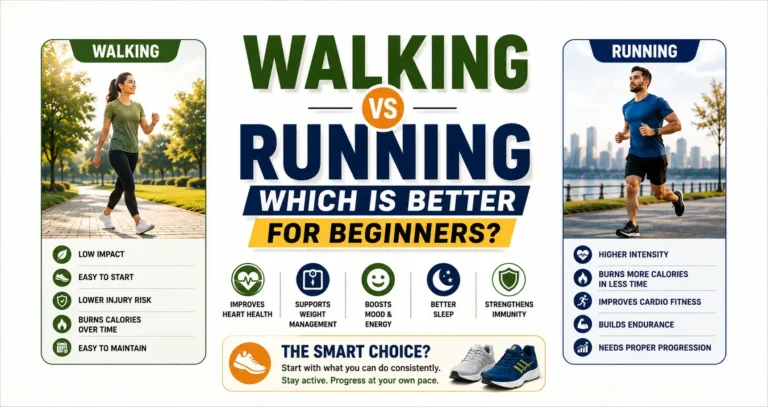
And if you’re deciding between different forms of cardio, compare walking vs. running to see which approach better fits your goals and preferences.
Frequently Asked Questions
Is a 30-day walking challenge good for beginners?
Yes. A walking challenge can be adapted for beginners by starting with short, comfortable walks and increasing gradually.
The important part is not copying someone else’s step count. Start from your current ability.
Do I need to walk 10,000 steps every day?
No. There is no universal requirement for every adult to reach 10,000 steps every day.
Current physical-activity recommendations emphasize weekly activity duration and intensity, while research suggests that health benefits are associated with various step counts below 10,000.
How long should I walk each day?
It depends on your current fitness level.
This challenge starts with approximately 10 minutes for beginners and gradually builds toward 25–30-minute walks.
You can adjust the plan based on your ability.
Can I split my walking into shorter sessions?
Yes.
Physical activity doesn’t have to happen in one continuous session. However, the activity can be spread throughout the week and broken into smaller chunks.
For example, you could do:
- 10 minutes in the morning
- 10 minutes at lunch
- 10 minutes in the evening
What if I can’t walk for 30 minutes?
That’s completely fine.
Start with what you can comfortably manage.
A shorter walk that you repeat consistently is more useful for building a sustainable routine than an unrealistic target that makes you quit.
Should I walk every day for 30 days?
You can include walking or gentle movement every day, but your walks don’t all need to be the same duration or intensity.
This plan deliberately includes easier and rest days.
Can walking help me lose belly fat?
Walking can contribute to overall energy expenditure and weight management, but you cannot reliably choose where your body loses fat first.
If weight loss is your goal, walking works best as part of a broader sustainable lifestyle that includes appropriate nutrition and regular physical activity.
What should I do if walking causes pain?
Don’t simply push through significant or persistent pain.
Reduce the activity and consider speaking with a qualified healthcare professional, particularly if you have an injury, medical condition, or other health concern.
What should I track during the challenge?
You can track:
- Walking minutes
- Steps
- Pace or intensity
- How you felt
- Rest days
- Daily movement
- Weekly consistency
The most important metric is the one you can realistically use consistently.
Build Your 30-Day Better Living Routine
You’ve got the walking plan. Now turn it into a daily habit.
The 30-Day Better Living Planner from InfuseUrLife can help you track your walks, steps, workouts, movement, and other healthy habits throughout the month.
[Download the 30-Day Better Living Planner]
Small actions. Consistent effort. A better routine.
Live better. Live smarter. Every day.
Final Takeaway
A successful 30-day walking challenge isn’t about reaching an impressive step count as quickly as possible.
It’s about starting from your current level, walking consistently, gradually increasing your activity, and learning what works for your lifestyle.
You don’t need to begin with 10,000 steps.
You don’t need a gym.
You don’t need a perfect schedule.
Start with a walk you can actually complete.
Then do it again tomorrow.
By Day 30, the biggest win may not be the number on your fitness tracker. It may be that walking has become something you naturally make time for.
And that’s the habit worth keeping.
Walk more. Move more. Build a routine you can maintain.
Live better. Live smarter. Every day.
References:
https://pubmed.ncbi.nlm.nih.gov/40713949
https://www.cdc.gov/healthy-weight-growth/physical-activity/getting-started.html
https://www.cdc.gov/physical-activity-basics/measuring/index.html
https://www.cdc.gov/healthy-weight-growth/physical-activity/




One Comment
Comments are closed.