Benefits of Walking After Meals
A short walk after eating is one of the simplest ways to add more movement to your day. You do not need a workout plan, gym membership, or a long block of free time. A few minutes of comfortable walking after lunch or dinner can fit naturally into an existing routine.
The idea is particularly interesting because research has found that physical activity performed after a meal can influence the body’s post-meal glucose response. Studies have generally found that post-meal exercise can reduce the rise in blood glucose compared with remaining inactive, although the size of the effect depends on factors such as timing, meal composition, activity intensity and the individual.
That does not mean a post-meal walk is a treatment for diabetes or another medical condition. It is simply a practical way to introduce gentle movement into a part of the day when many people would otherwise remain seated.
If you already want to make walking a regular habit, our guide to Benefits of Walking Every Day explains how regular walking can contribute to an active lifestyle.
Why people walk after eating
The simplest reason to walk after eating is also the most useful: it creates a natural opportunity to move.
After lunch or dinner, many people immediately return to a desk, sofa, television or phone. A short walk changes that pattern without requiring a separate workout session.
A post-meal walk can be useful for several practical reasons:
- It adds movement to an otherwise sedentary part of the day.
- It can help you build a consistent walking habit.
- It gives you an easy opportunity to accumulate physical activity.
- It can be a simple transition between eating and returning to work or other activities.
- A short walk can be easier to maintain than a longer exercise session.
- Walking after dinner can create a useful break between the meal and the rest of the evening.
There is also a physiological reason researchers are interested in walking after meals.
When you eat, nutrients from the meal are absorbed and blood glucose rises. Physical activity uses energy and increases the demand for glucose in working muscles. Research suggests that moving after eating can therefore affect the post-meal glucose response.
The important point is that this is one potential physiological effect of post-meal movement, not a promise that walking will prevent, treat or reverse a medical condition.
For the bigger picture, regular walking itself has many potential benefits. Our article on Benefits of Walking Every Day covers cardiovascular health, physical activity, mood, sleep and other reasons to make walking part of your routine.
What research suggests
Research on post-meal walking has particularly focused on what happens to blood glucose after eating.
A 2023 systematic review and meta-analysis examined randomized controlled trials comparing exercise before and after meals with inactive control conditions. The researchers found that exercise after eating produced a greater reduction in post-meal glucose excursions than exercising before the meal or remaining inactive. The review also found that the timing of exercise mattered, with activity performed relatively soon after eating showing a stronger acute effect than activity performed later.
Another study published in Nutrients looked specifically at post-meal brisk walking in healthy young adults. Participants completed 30-minute walking sessions after meals with different carbohydrate contents. The researchers found that post-meal walking substantially reduced the glucose peak compared with the non-walking condition.
These findings are useful, but they need to be interpreted carefully.
The studies do not mean that everyone needs to walk after every meal. They also do not establish that a short walk will produce the same response in every person.
The research is better understood this way:
Eating and then moving your body can produce a different physiological response from eating and remaining completely inactive.
That is a practical reason to consider a short walk after meals, especially if it is an easy habit for you to maintain.
For general health, walking should still be considered part of your overall physical-activity routine rather than a replacement for it. Current guidelines recommend that adults work toward at least 150 minutes of moderate-intensity physical activity each week, together with muscle-strengthening activity on at least two days per week.
How soon can you walk?
You do not need to wait for a specific amount of time before every post-meal walk.
Research on post-meal exercise suggests that activity performed relatively soon after eating can have a stronger effect on the post-meal glucose response than waiting longer. A systematic review found the strongest effect when activity began in the early post-meal period, although the exact timing used in studies varied.
For everyday life, a practical approach is to give yourself enough time to feel comfortable and then start walking.
For example:
Finish your meal → get ready → begin an easy walk when you feel comfortable.
There is no need to turn this into a race against the clock.
If you have eaten a particularly large meal, feel overly full, or simply do not feel comfortable moving immediately, wait until you feel ready. The goal is to create a sustainable habit, not to force yourself to walk at an uncomfortable moment.
What about walking immediately after eating?
For many people, a gentle walk shortly after eating is perfectly practical.
Start slowly rather than immediately walking at a brisk pace. Your first few minutes can simply be an easy transition into movement.
If you experience discomfort, nausea, unusual breathlessness, dizziness or significant pain, stop rather than trying to complete a predetermined walking time.
How long should a walk be?
There is no single post-meal walking duration that everyone needs to follow.
Research has examined different exercise durations, including short walking sessions and longer bouts. The 2023 systematic review found that exercise duration and timing can influence the post-meal response, but the studies were relatively small and varied in their methods.
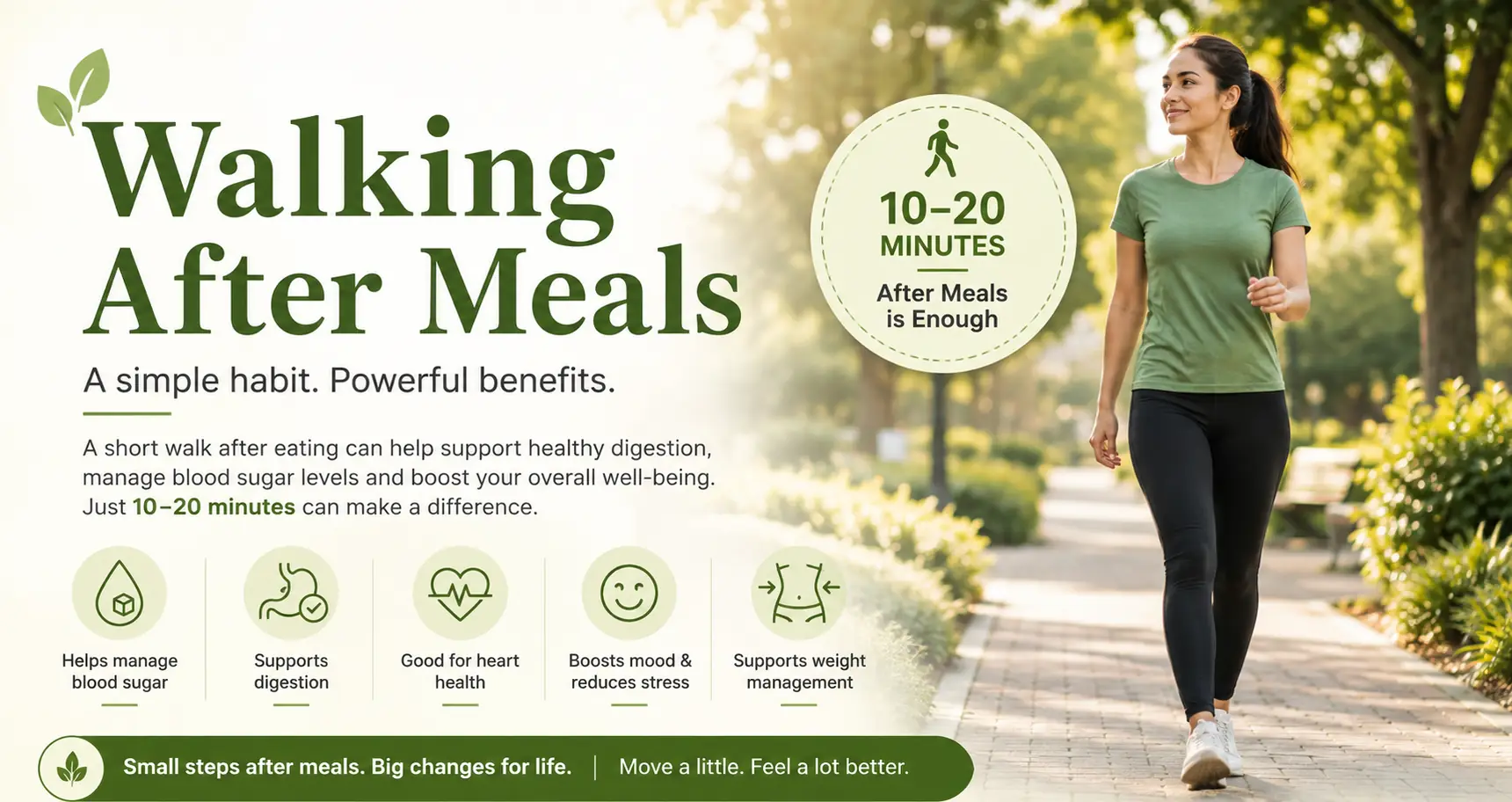
For everyday use, 10–20 minutes is a practical starting point for many people.
You can use the following framework:
| Situation | Practical starting point |
| New to regular walking | 5–10 minutes |
| Comfortable with walking | 10–20 minutes |
| Already walking regularly | 20–30 minutes |
| Busy day | A short walk is better than skipping movement entirely |
These are practical suggestions, not medical prescriptions.
If you are new to walking, starting with a shorter duration and gradually building up is consistent with advice from organizations such as the American Heart Association.
If you want a more structured introduction to walking, read our Walking for Beginners: A Simple Step-by-Step Guide. It explains how to start with manageable durations and gradually increase your walking routine.
Do you need to walk after every meal?
No.
You can choose the meal that fits your schedule best.
For example:
- A 10-minute walk after lunch
- A 15-minute walk after dinner
- A longer walk after your evening meal on days when you have more time
Consistency matters more than making every meal part of an exercise routine.
Easy post-meal routine
The easiest routine is one that requires almost no decision-making.
Try this simple sequence:
Step 1: Finish your meal
Give yourself a moment to finish eating and get comfortable.
You do not need to rush out the door immediately.
Step 2: Get ready to walk
Put on comfortable footwear if needed, take your phone or keys, and choose a safe route.
If you are walking outdoors after dark, choose a well-lit route and remain aware of traffic and your surroundings.
Step 3: Start slowly
Walk at an easy pace for the first few minutes.
There is no need to make a post-meal walk into a hard workout.
Step 4: Settle into a comfortable pace
Once you feel comfortable, continue at a natural pace.
If you already walk regularly, you may choose to walk somewhat faster, provided you feel comfortable.
Step 5: Stop when your planned time is complete
For a simple starting routine, try 10 minutes.
If you feel good and have time, continue for longer.
Step 6: Repeat
Attach the walk to a meal you already eat consistently.
For example:
Dinner → clear the table → put on shoes → 10–15 minute walk.
This removes the need to decide when to exercise every evening.
The American Heart Association recommends starting slowly and gradually building activity into your routine, while the CDC emphasizes that adults can spread physical activity throughout the week and accumulate it in manageable amounts.
A simple 7-day post-meal walking experiment
If you want to test whether the habit works for your lifestyle, try this:
| Day | Post-meal walk | Goal |
| Day 1 | 10 minutes | Get started |
| Day 2 | 10 minutes | Repeat |
| Day 3 | 10–15 minutes | Build consistency |
| Day 4 | 10–15 minutes | Keep it easy |
| Day 5 | 15 minutes | Make it part of the routine |
| Day 6 | 15–20 minutes | Add time if comfortable |
| Day 7 | 10–20 minutes | Choose a duration you can sustain |
You do not need to increase the duration every day.
The purpose of the first week is simply to make walking after a meal feel normal.
Walking after eating vs. a regular daily walk
A post-meal walk does not have to replace your main walking session.
Think of the two approaches differently.
A regular daily walk can be used to build aerobic fitness and accumulate your weekly physical activity.
A post-meal walk is primarily a convenient way to add movement around an existing daily event.
For example, someone might have:
- 30-minute brisk walk in the morning
- 10-minute walk after lunch
- 15-minute walk after dinner
Or, on a busy day:
- 10-minute walk after lunch
- 10-minute walk after dinner
Both approaches can contribute to your overall activity.
Current physical-activity guidance emphasizes accumulating regular movement rather than treating exercise as something that must happen in one long session.
Who should be cautious?
Walking is generally an accessible form of physical activity, but a post-meal walk is not automatically appropriate for everyone in every situation.
Use extra caution if you:
- Have been advised by a healthcare professional to restrict physical activity.
- Have recently had surgery or a significant medical event.
- Experience recurring chest discomfort during activity.
- Develop unusual or severe shortness of breath.
- Experience fainting or significant dizziness.
- Have persistent or worsening pain when walking.
- Feel unwell after eating and movement makes your symptoms worse.
If you have a medical condition that affects your ability to exercise, ask your healthcare professional what level and type of activity is appropriate for you.
This is particularly important if you take medication that can affect blood glucose or have been given specific exercise instructions by your healthcare team.
The purpose of this article is to explain a practical walking habit. It is not medical advice and should not be used as a treatment plan for diabetes or any other condition.
FAQs
Is walking after meals good for you?
Walking after meals can be a practical way to add movement to your day. Research also suggests that post-meal exercise can influence the body’s post-meal glucose response. However, the effect varies between individuals and studies, so it should not be treated as a guaranteed health outcome.
How soon should I walk after eating?
You can begin a gentle walk once you feel comfortable after eating. Research suggests that activity performed relatively soon after a meal can have a stronger acute effect on the post-meal glucose response than waiting longer.
How long should I walk after a meal?
There is no universal duration. For a practical starting point, 10–20 minutes is reasonable for many people. Beginners can start with 5–10 minutes and gradually increase their walking time as they become more comfortable.
Is a 10-minute walk after dinner useful?
A 10-minute walk can be a practical way to add movement after dinner. It may also be easier to maintain consistently than committing to a longer session. Short bouts of activity can contribute to your overall physical activity.
Should I walk after every meal?
You do not need to walk after every meal. Choose one meal that fits naturally into your routine and build consistency first. You can add additional post-meal walks if they fit comfortably into your schedule.
Is walking after eating better than walking before eating?
For the specific short-term response of blood glucose after a meal, research suggests that exercise after eating can be more effective than exercise before eating. However, this does not mean that walking before a meal is ineffective or that everyone needs to exercise immediately after eating.
Can I walk after a large meal?
You can take a gentle walk if you feel comfortable, but there is no need to force yourself to walk immediately after a very large meal. If you feel overly full or uncomfortable, give yourself time before moving.
Does walking after meals help with digestion?
Walking may feel comfortable for some people after eating, but this article does not treat walking as a medical treatment for digestive problems. If you regularly experience significant bloating, pain, reflux or other digestive symptoms, discuss them with an appropriate healthcare professional.
Can walking after meals help with blood sugar?
Research indicates that post-meal exercise can reduce post-meal glucose excursions compared with inactivity, particularly when activity is performed relatively soon after eating. However, this does not mean that walking treats or cures diabetes. People with diabetes or other conditions affecting blood glucose should follow the exercise and medication advice provided by their healthcare professional.
Is an after-dinner walk a good habit?
Yes. An after-dinner walk can be an easy way to create a repeatable movement habit because dinner occurs at roughly the same point in the day for many people. Even a short walk can be useful when the alternative is sitting immediately after the meal.
Make the post-meal walk easier to maintain
The biggest advantage of walking after meals may not be a particular number of minutes or steps.
It is the fact that the habit can be attached to something you already do.
You eat lunch.
You walk.
You eat dinner.
You walk.
That simple connection removes some of the planning required to exercise.
Start with 5–10 minutes if you are new to walking. If that feels comfortable, gradually build toward 10–20 minutes or longer. Keep the pace comfortable, choose safe surroundings and do not force yourself to walk when you feel unwell.
And remember that a post-meal walk is only one part of an active lifestyle. Adults should work toward at least 150 minutes of moderate-intensity physical activity each week and include muscle-strengthening activity on at least two days.
The goal is not to make every meal an exercise session.
It is simply to turn a few minutes of movement into something you can repeat.
Ready to make better habits part of your everyday life? Download the 30-Day Better Living Planner and use it to track your walks, build consistency and make progress one day at a time.
References:
https://link.springer.com/article/10.1007/s40279-022-01808-7
https://pmc.ncbi.nlm.nih.gov/articles/PMC8912639/
https://diabetesjournals.org/care/article/24/4/775/23438/Postprandial-Blood-Glucose
https://pmc.ncbi.nlm.nih.gov/articles/PMC10036272/
https://pubmed.ncbi.nlm.nih.gov/35268055/
https://www.cdc.gov/physical-activity-basics/guidelines/adults.html
https://www.who.int/initiatives/behealthy/physical-activity