10-Minute Full-Body Stretching Routine for Beginners at Home
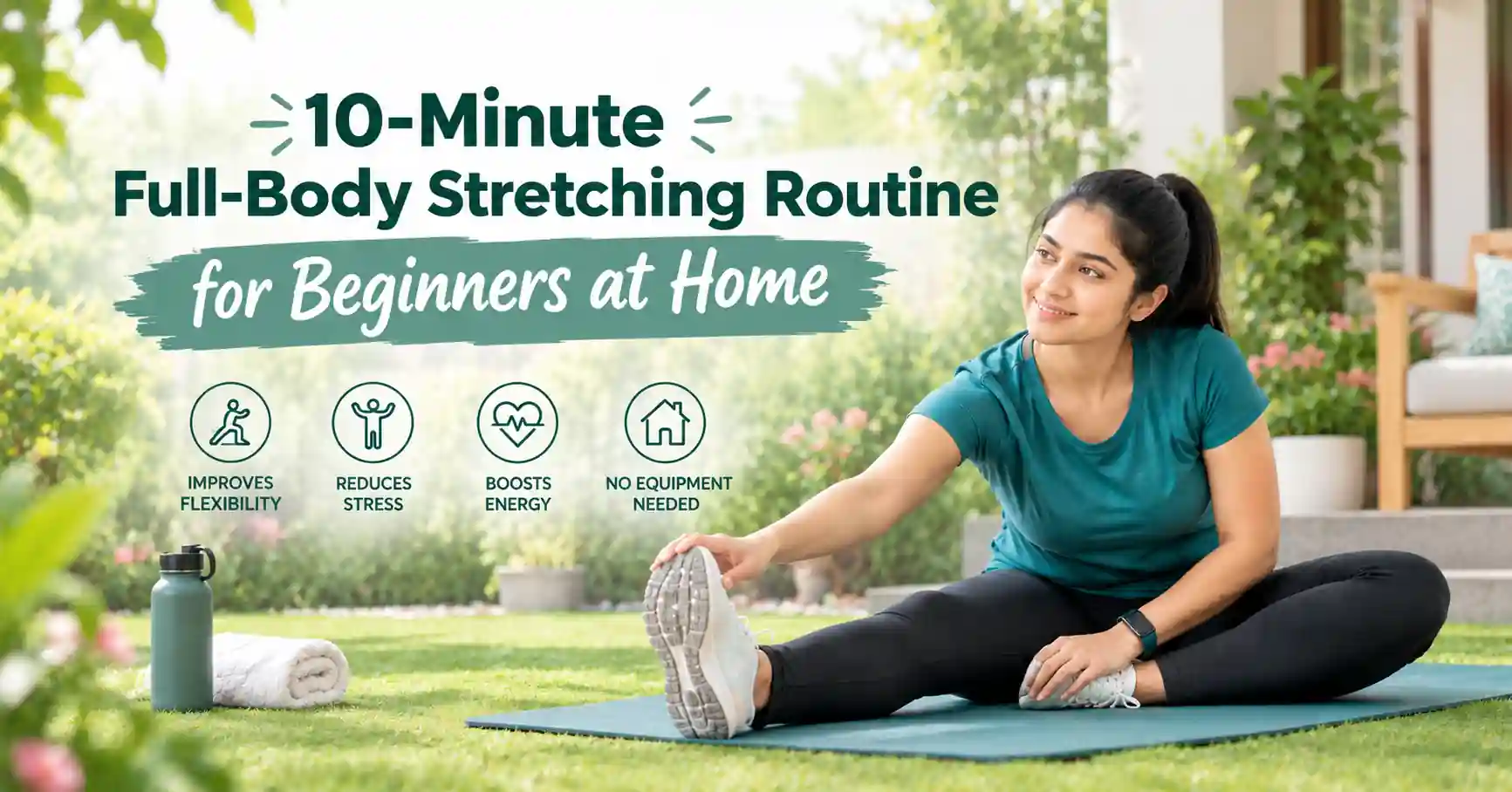
If you spend most of your day sitting, working at a desk, exercising, or simply feeling stiff after a long day, 10-minute full-body stretching routine for beginners can be a simple way to work on flexibility and everyday mobility.
You don’t need a gym, expensive equipment, or an advanced fitness background. A little floor space, comfortable clothing, and a few minutes are enough to get started.
Stretching can help improve flexibility and joint range of motion, which can make everyday movements feel easier. However, stretching should feel gentle rather than painful, and it shouldn’t be treated as a cure for an injury or medical condition. Experts recommend warming up before stretching, moving slowly, avoiding bouncing, breathing normally, and stopping if a stretch causes pain.
Table of Contents
- What Is a Beginner Stretching Routine?
- When Should Beginners Stretch?
- 10 Simple Stretches to Try at Home
- How Long Should You Hold Each Stretch?
- A Simple 10-Minute Beginner Stretching Routine
- Common Stretching Mistakes to Avoid
- Beginner Stretching Routine for Desk Workers
- How Often Should You Stretch?
- Stretching Safety Tips for Beginners
- Frequently Asked Questions
- Build Your 30-Day Better Living Routine
- Final Takeaway
What Is a Stretching Routine for Beginners?
A beginner stretching routine is a simple sequence of movements designed to gently stretch major muscle groups without requiring advanced flexibility or fitness experience.
For beginners, the goal isn’t to force your body into a deep stretch. Instead, focus on controlled movements and a comfortable feeling of tension.
A good routine can include stretches for areas such as:
- Neck
- Shoulders
- Chest
- Hips
- Thighs
- Hamstrings
- Calves
- Lower body
- Back and torso
Experts recommend focusing on major muscle groups and stretching both sides of the body. It also recommends moving gently and holding a stretch for about 30 seconds rather than bouncing into the position.
Think of stretching as a way to gradually give your body more opportunities to move comfortably—not as a test of how flexible you are.
If you are also building strength at home, you can combine your stretching routine with bodyweight exercises for beginners to create a more balanced fitness routine.
When Should Beginners Stretch?
The best time to stretch depends on what you are doing.
Before exercise
If you are about to exercise, don’t immediately move into long static stretches while your muscles are cold.
Instead, begin with a few minutes of light activity or dynamic movements that gradually prepare your body for exercise.
Examples include:
- Walking in place
- Arm circles
- Gentle leg swings
- Easy bodyweight movements
Experts recommend warming up with around 5–10 minutes of light activity before stretching.
After exercise
Static stretching can be particularly convenient after a workout, when your muscles are already warm.
For example, after a home workout, you could finish with:
- Calf stretches
- Hamstring stretches
- Quadriceps stretches
- Hip stretches
- Shoulder stretches
The British Heart Foundation also recommends performing flexibility exercises when muscles are warm, such as after aerobic exercise or as part of a cool-down.
During a workday
You don’t have to wait for a workout.
If you spend several hours sitting, short movement breaks can help you avoid staying in the same position for too long. You can use simple neck, shoulder, chest and side stretches during your workday.
10 Simple Stretches to Try at Home
Here are 10 beginner-friendly stretches you can incorporate into a stretching routine at home.
1. Gentle Neck Stretch
Targets: Neck and upper shoulder area
Sit or stand comfortably with your shoulders relaxed.
Slowly tilt your head toward one shoulder until you feel a gentle stretch on the opposite side of your neck. Keep your shoulders relaxed rather than lifting them toward your ears.
Hold for about 20–30 seconds, then return to the starting position and repeat on the other side.
Beginner tip: Keep the movement gentle. Your head doesn’t need to move very far.
Common mistake: Pulling aggressively on your head to create a deeper stretch.
Experts recommend slow, gentle neck stretching and holding the position for about 30 seconds.
2. Cross-Body Shoulder Stretch
Targets: Shoulder and upper-back area
Raise one arm across your chest.
Use the opposite hand to gently guide the arm closer to your body. Keep the shoulder relaxed and avoid pulling directly on the elbow joint.
Hold for around 20–30 seconds before switching sides.
Beginner tip: The goal is gentle tension around the back of the shoulder—not discomfort.
Common mistake: Shrugging the shoulder toward your ear.
The British Heart Foundation includes a cross-body shoulder stretch in its flexibility and warm-up guidance.
3. Chest Stretch
Targets: Chest and front of the shoulders
Stand upright and place your hands behind your back, if comfortable. Gently draw your shoulders back and open your chest.
Keep your ribs and lower back relaxed rather than forcing your chest forward.
Hold for 20–30 seconds.
Beginner modification: If clasping your hands behind your back is uncomfortable, simply place your hands on your lower back and gently bring your elbows toward each other.
Common mistake: Arching your lower back to create a bigger stretch.
4. Standing Side Stretch
Targets: Side of the torso and upper body
Stand with your feet about hip-width apart.
Raise one arm overhead and slowly lean your upper body to the opposite side. Keep both feet grounded and avoid twisting your body.
Hold for about 20–30 seconds, then switch sides.
Beginner tip: Imagine creating length through the side of your body instead of trying to bend as far as possible.
Common mistake: Rotating your chest toward the floor or ceiling.
Side-body stretching is also included in British Heart Foundation movement guidance.
5. Hip Flexor Stretch
Targets: Front of the hip
Start in a half-kneeling position with one knee on the floor and the other foot in front of you.
Keep your upper body upright and gently shift your weight forward until you feel a stretch around the front of the hip of the kneeling leg.
Hold for about 30 seconds and switch sides.
Beginner modification: Place a folded towel underneath the knee for extra cushioning.
Common mistake: Leaning forward by arching your lower back instead of moving your hips gently forward.
Experts recommend keeping the back straight and abdominal muscles engaged during a hip-flexor stretch.
6. Standing Quadriceps Stretch
Targets: Front of the thigh
Stand near a wall or sturdy chair if you need support.
Bend one knee and bring your heel toward your buttocks. Hold your ankle or foot and gently move the heel upward until you feel a stretch along the front of the thigh.
Keep your knees relatively close together.
Hold for about 30 seconds and switch sides.
Beginner modification: Use a wall or chair for balance.
Common mistake: Pulling the foot aggressively or allowing the knee to move far outward.
Experts recommend using support when necessary and keeping the knees close together during this stretch.
7. Hamstring Stretch
Targets: Back of the thigh
Stand upright and place one heel slightly forward.
Keep the front leg relatively straight while gently bending the opposite knee and moving your hips backward. Keep your back comfortable and straight.
Hold for around 30 seconds and switch sides.
Beginner tip: You don’t need to touch your toes.
Common mistake: Rounding your back and forcing yourself lower.
The British Heart Foundation demonstrates a standing hamstring variation using a small forward step and controlled hip movement.
8. Standing Calf Stretch
Targets: Calf muscles
Stand facing a wall.
Place one foot behind you and keep that heel on the floor. Bend the front knee slightly while keeping the back leg relatively straight.
Lean gently toward the wall until you feel a stretch in the calf of the rear leg.
Hold for around 30 seconds, then switch sides.
Beginner modification: Keep both hands against the wall for support.
Common mistake: Lifting the back heel off the floor.
The calf stretch is one of the basic stretches that experts recommend
9. Knee-to-Chest Stretch
Targets: Lower-back and hip area
Lie on your back on a comfortable, firm surface.
Slowly bring one knee toward your chest while keeping the other leg in a comfortable position.
Hold gently for about 20–30 seconds and switch sides.
You can keep the opposite knee bent if that feels more comfortable.
Beginner tip: Move only as far as feels comfortable.
Common mistake: Pulling the knee aggressively toward the chest.
The knee-to-chest movement is among the basic stretches for people but in certain medical conditions, including osteoporosis, people may need to avoid it.
10. Child’s Pose
Targets: Hips, thighs and back
Begin on your hands and knees.
Slowly move your hips backward toward your heels while extending your arms forward. Lower your upper body as far as feels comfortable.
Hold for 20–30 seconds while breathing normally.
Beginner modification: Place a cushion or folded towel under your hips or forehead if needed.
Common mistake: Forcing your hips toward your heels when the position feels uncomfortable.
Child’s pose is also commonly included in beginner stretching and morning routines.
How Long Should You Hold Each Stretch?
For a beginner, around 20–30 seconds is a practical starting point for many static stretches.
Experts recommend holding a stretch for about 30 seconds and repeating it on both sides.
The British Heart Foundation similarly recommends holding muscle stretches for around 30 seconds and beginning with two repetitions before gradually increasing the volume as comfortable.
| Beginner guideline | Starting point |
| Hold each static stretch | 20–30 seconds |
| Repeat each side | 1–2 times |
| Weekly frequency | 2–3 days to start |
| Intensity | Gentle tension |
| Breathing | Normal and relaxed |
| Pain | Stop rather than push through |
Remember: longer isn’t automatically better. Your goal is controlled, comfortable stretching—not seeing how far you can force a joint or muscle.
A Simple 10-Minute Beginner Stretching Routine
If you don’t know where to begin, try this simple sequence.
| Stretch | Time |
| Neck stretch | 30 sec/side |
| Cross-body shoulder stretch | 30 sec/side |
| Chest stretch | 30 sec |
| Standing side stretch | 30 sec/side |
| Hip flexor stretch | 30 sec/side |
| Quadriceps stretch | 30 sec/side |
| Hamstring stretch | 30 sec/side |
| Calf stretch | 30 sec/side |
| Knee-to-chest | 30 sec/side |
| Child’s pose | 30 sec |
You don’t have to complete the entire sequence every day.
If you’re completely new to stretching, start with five movements and gradually add the others as the routine becomes familiar.
The most useful routine is the one you can repeat consistently.
Common Stretching Mistakes to Avoid
1. Stretching until it hurts
A stretch should generally create gentle tension rather than sharp or painful sensations.
If it hurts, ease out of the position.
2. Bouncing
Avoid repeatedly bouncing into a stretch. Use slow, controlled movements instead.
Experts specifically advise against bouncing because it can contribute to muscle injury and tightness.
3. Holding your breath
Continue breathing normally while stretching.
Holding your breath can make it harder to stay relaxed.
4. Comparing your flexibility with someone else
Flexibility differs between people.
Instead of trying to copy another person’s range of motion, focus on gradual improvement and comfortable movement.
5. Stretching only one side
If you’re doing a unilateral stretch, remember to repeat it on the other side unless a healthcare professional has specifically advised otherwise.
6. Trying to do everything on day one
You don’t need a 30-minute flexibility session to get started.
Five to ten minutes can be enough to establish the habit.
Beginner Stretching Routine for Desk Workers
If you work at a computer for several hours, your stretching routine can be shorter and more frequent.
Try taking a movement break during your workday and performing a few gentle movements:
1. Neck stretch — 20 seconds each side
Tilt your head gently toward each shoulder.
2. Cross-body shoulder stretch — 20 seconds each side
Bring one arm across your chest.
3. Chest opener — 20–30 seconds
Gently draw your shoulders back and open your chest.
4. Standing side stretch — 20 seconds each side
Reach one arm overhead and gently lean sideways.
5. Calf stretch — 20–30 seconds each side
Use a wall or desk for balance.
You can repeat these movements during the day rather than waiting for one long stretching session.
And stretching shouldn’t replace movement altogether. Consider pairing short stretching breaks with regular walking and other forms of physical activity.
For more ideas, see our guide on the benefits of walking every day.
How Often Should You Stretch?
You don’t necessarily need to stretch for a long time every day.
For beginners, starting with two to three stretching sessions per week is a reasonable goal. As the routine becomes comfortable, you can incorporate short stretching sessions more frequently.
Experts recommend stretching major muscle groups at least two to three days a week, while the British Heart Foundation also suggests flexibility training two to three times a week.
Consistency matters more than trying to complete an ambitious routine once and then stopping.
A simple approach is:
- Monday: 10-minute stretching routine
- Wednesday: 10-minute stretching routine
- Friday: 10-minute stretching routine
- Other days: Short movement breaks as needed
You can also stretch after your regular home workouts.
If you’re building strength as well as flexibility, consider combining this routine with a resistance band workout for beginners or a bodyweight workout.
Stretching Safety Tips for Beginners
Keep these points in mind before starting:
- Warm up before longer static stretching.
- Move slowly into every position.
- Never bounce.
- Keep breathing normally.
- Stop if a movement causes pain.
- Don’t force your range of motion.
- Use a wall or chair when you need balance support.
- Give both sides of the body attention.
- Use a mat or comfortable surface for floor stretches.
- If you have an injury or medical condition, ask a healthcare professional which movements are appropriate.
If a particular stretch consistently causes pain rather than gentle tension, don’t simply push harder. Stop and get appropriate guidance.
Frequently Asked Questions
Is stretching good for beginners?
Yes. Stretching can be incorporated into a beginner fitness routine to work on flexibility and range of motion. The key is to start gently and avoid forcing positions.
How long should a beginner stretch each day?
You don’t need a long session. A 5–10 minute routine can be a practical starting point. Individual static stretches can often be held for around 20–30 seconds, depending on the movement and your comfort.
Should I stretch before or after exercise?
For longer static stretches, stretching after exercise or after a warm-up is generally preferred. Before exercise, use light activity and dynamic movements to prepare your body.
Can I stretch every day?
Some people can comfortably include gentle stretching every day, but you don’t need to perform a long routine daily. Starting with two or three sessions per week is a practical goal.
Can stretching improve flexibility?
Regular stretching can help improve flexibility and joint range of motion. Progress is gradual, and results vary from person to person.
Is it normal for stretching to hurt?
A gentle pulling or tension sensation can be normal, but stretching should not be painful. Sharp or significant pain is a reason to stop the movement.
What should I do if I have an injury?
Don’t assume that a general stretching routine is appropriate for an injury. Speak with a doctor or qualified physical therapist for individualized guidance. Experts specifically recommend professional advice for people with health conditions or injuries.
Build Your 30-Day Better Living Routine
You don’t need a complicated fitness routine to become more active. Small, consistent habits can make it easier to build movement into your everyday life.
Download the 30-Day Better Living Planner from InfuseUrLife and track your stretching, workouts, walking, daily movement and healthy habits throughout the month.
[Download the 30-Day Better Living Planner]
Small actions. Consistent effort. A better routine.
Live better. Live smarter. Every day.
Final Takeaway
A beginner stretching routine doesn’t need to be complicated.
Start with a few simple movements for your neck, shoulders, chest, hips, thighs, hamstrings, calves and back. Move slowly, breathe normally and aim for gentle tension rather than pain.
You can begin with just five to ten minutes and gradually make stretching a regular part of your weekly routine.
And remember that flexibility is only one part of fitness. Pair stretching with strength exercises, walking and regular daily movement to create a more complete approach to staying active.
The goal isn’t to become extremely flexible overnight.
The goal is to move consistently, comfortably and confidently—one stretch at a time.
Important: This Blog Post is for general educational purposes and is not a substitute for individual medical or physical-therapy advice. If you have an injury, persistent pain, a medical condition, or concerns about whether a particular stretch is appropriate for you, speak with a qualified healthcare professional before starting.
References:
A Guide to Basic Stretches
Stretching and Flexibility
Stretching Exercises to Improve Your Flexibility in 10 Minutes
Seated Stretches for the Workplace