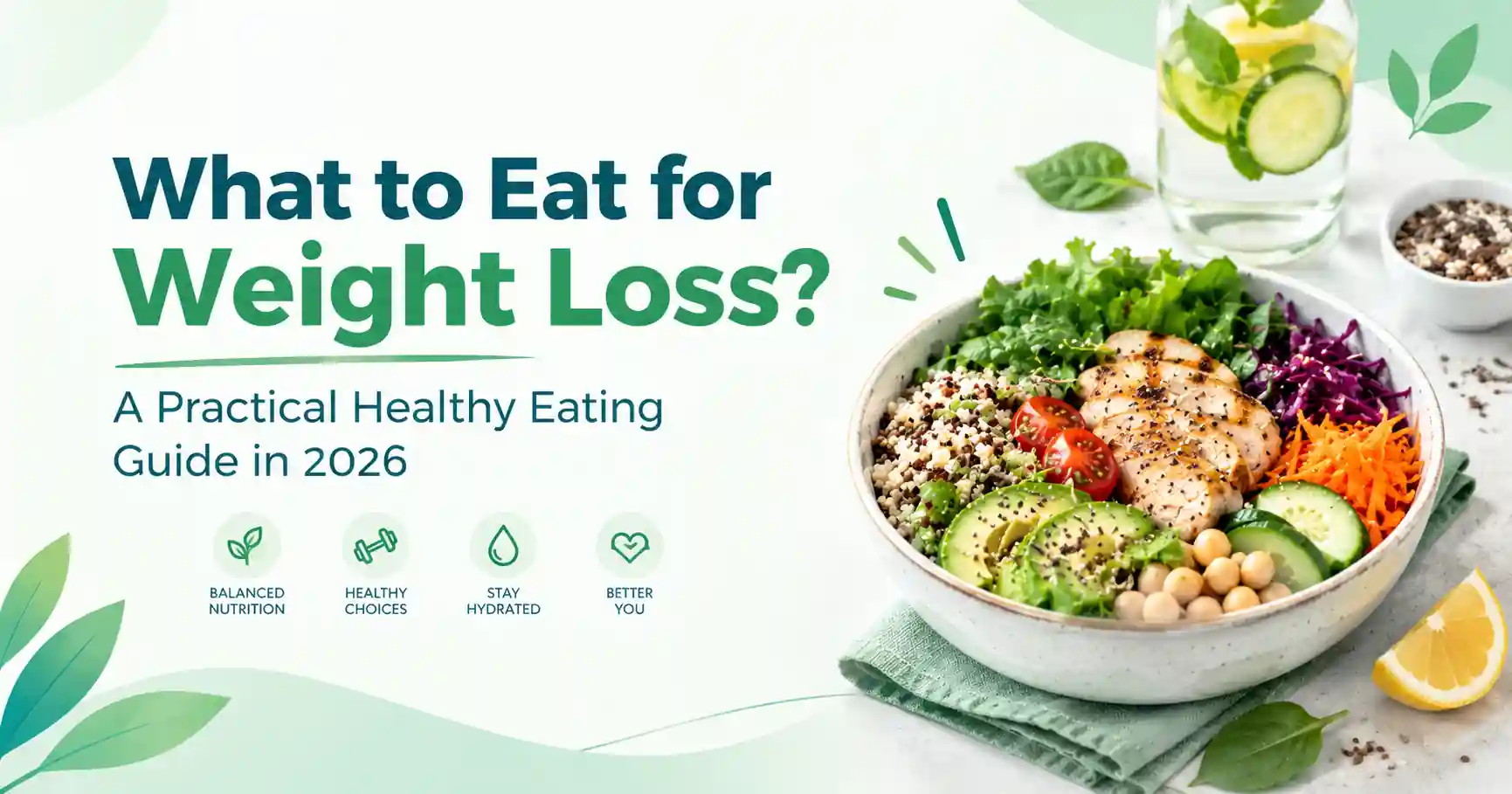
What to Eat for Weight Loss: A Practical Healthy Eating Guide in 2026
Excerpt: Wondering what to eat for weight loss without following a restrictive diet? Learn how to build balanced meals with protein, fiber-rich foods, whole grains, fruits, vegetables and healthy fats, plus practical portion tips, meal ideas and foods to limit for sustainable weight management.
If you are wondering what to eat for weight loss, the answer is not one magic food, detox drink or restrictive diet. Sustainable weight management is usually about building meals around nutritious foods, managing portions and choosing an eating pattern you can realistically maintain.
A healthy weight-loss diet can include vegetables, fruits, whole grains, beans and lentils, protein-rich foods, dairy or suitable alternatives, nuts, seeds and healthy fats. The goal is not to eliminate entire food groups but to improve the overall quality and balance of your meals.
Research also shows that there is no single diet that works best for everyone. Different eating patterns can support weight loss, but long-term success depends heavily on calorie intake, food choices, personal preferences and the ability to maintain the approach over time.
What to Eat for Weight Loss: The Simple Answer
A simple way to think about what to eat for weight loss is:
Build most meals around:
- Plenty of vegetables
- A source of protein
- A high-fiber carbohydrate or whole grain
- A small amount of healthy fat
- Water or another low-calorie beverage
For example, an Indian-style meal could include dal or grilled chicken, a large serving of vegetables, a moderate portion of roti or brown rice, plain curd and a small amount of healthy fat.
This approach is more sustainable than trying to survive on salads or completely eliminating carbohydrates.
The Harvard Healthy Eating Plate similarly recommends making roughly half of a meal vegetables and fruits, with the remaining portion divided between whole grains and healthy protein sources.
How Food Choices Affect Weight Loss
Weight loss occurs when, over time, you consume less energy than your body uses. However, that does not mean every calorie has the same practical value for your eating habits.
Foods differ in how filling they are, how many nutrients they provide and how easy they make it to maintain an appropriate calorie intake.
For example, a meal containing vegetables, beans, whole grains and protein can provide more volume, fiber and nutrients than a meal dominated by sugary drinks, refined snacks and fried foods.
The key is therefore not simply to ask, “How many calories does this food contain?”
A better question is:
“Will this food help me build a nutritious and satisfying meal that I can maintain?”
Evidence-based reviews identify energy deficit as a major driver of weight loss while also emphasizing the importance of food type, dietary pattern, meal timing, preferences and long-term adherence.
The Best Foods to Eat for Weight Loss
There is no official list of foods that automatically cause fat loss. Instead, some categories of food can make a healthy eating pattern easier to maintain.
1. Protein-Rich Foods
Protein can help make meals more satisfying and is important for maintaining body tissues, including muscle.
Good choices include:
- Eggs
- Fish
- Chicken
- Lean meat
- Greek yogurt or plain curd
- Paneer in appropriate portions
- Tofu
- Soy products
- Lentils
- Chickpeas
- Rajma and other beans
- Peas
- Nuts and seeds
Plant proteins can be particularly useful because foods such as beans, lentils, chickpeas and soy can provide both protein and fiber.
During weight loss, adequate protein is also useful for helping preserve lean body mass, particularly when combined with physical activity.
Practical tip: Instead of making your meal mostly rice, roti or another carbohydrate, add a clear protein source to the meal.
For example:
Dal + vegetables + roti is generally a more balanced meal than a plate consisting primarily of roti.
2. Vegetables
Vegetables are among the most useful foods to emphasize when trying to manage your weight.
They can provide fiber, vitamins, minerals and plenty of food volume without requiring large amounts of calories.
Good choices include:
- Spinach and other leafy greens
- Broccoli
- Cauliflower
- Carrots
- Tomatoes
- Cucumber
- Capsicum
- Beans
- Cabbage
- Gourds
- Mushrooms
- Pumpkin
- Okra
- Eggplant
Try to include different colors throughout the week rather than relying on one vegetable every day.
The CDC recommends including a variety of nutrient-dense vegetables as part of a healthy eating pattern. Fresh, frozen and appropriately prepared canned vegetables can all be useful choices.
3. Fruits
Fruit does not need to be removed from a weight-loss diet.
Whole fruits provide nutrients and fiber and can be a more filling choice than many processed desserts or sugary snacks.
Examples include:
- Apples
- Oranges
- Guava
- Papaya
- Berries
- Pears
- Bananas
- Melons
- Kiwi
- Mango in an appropriate portion
Whole fruit is generally preferable to relying heavily on fruit juice because the whole fruit retains its fiber and requires more chewing.
The WHO recommends a varied diet containing fruits and vegetables and notes that whole fruits are preferable to consuming large amounts of fruit juice.
Remember: Fruit contains natural sugars, but that does not make whole fruit equivalent to sweets or sugary drinks.
4. High-Fiber Foods
Fiber is an important part of a healthy eating pattern and can help make meals more satisfying.
Useful sources include:
- Lentils
- Chickpeas
- Rajma
- Beans
- Oats
- Barley
- Whole-wheat foods
- Brown rice
- Millets
- Vegetables
- Whole fruits
- Chia seeds
- Flaxseeds
- Nuts
Instead of looking for a single “high-fiber superfood,” aim to include fiber from several food groups.
For example:
Breakfast: oats + fruit + seeds
Lunch: dal + vegetables + whole-grain roti
Snack: fruit + a small portion of nuts
Dinner: beans/tofu/fish + vegetables + whole grain
This creates variety while increasing the nutritional quality of the overall diet.
5. Whole Grains and Better Carbohydrates
Carbohydrates do not automatically prevent weight loss.
The quality and quantity of carbohydrate sources matter.
Better choices can include:
- Oats
- Brown rice
- Whole-wheat roti
- Barley
- Quinoa
- Millets
- Whole-grain bread
- Beans and lentils
- Other minimally processed grain-based foods
Harvard’s Healthy Eating Plate recommends choosing whole grains over refined grains because whole and intact grains generally have a milder effect on blood sugar and insulin than refined grain products.
You do not necessarily need to remove rice, roti or other carbohydrate foods.
Instead, consider:
portion + food quality + protein + vegetables
rather than treating carbohydrates as automatically “bad.”
6. Healthy Fats
Healthy fats can be part of a balanced weight-loss diet.
Examples include:
- Nuts
- Seeds
- Avocado
- Olive oil
- Other unsaturated plant oils
- Fatty fish
However, “healthy” does not mean unlimited.
Fats are energy-dense, so large quantities can increase the total calorie content of a meal quickly.
A small handful of nuts may be useful. Eating several handfuls while watching television is a different situation.
Harvard recommends healthy plant oils in moderation and emphasizes choosing healthier fat sources rather than simply trying to eliminate dietary fat.
7. Dairy and Dairy Alternatives
Depending on your dietary preferences and tolerance, useful choices may include:
- Plain curd
- Greek yogurt
- Milk
- Unsweetened fortified soy beverages
- Cottage cheese or paneer in appropriate portions
Try to choose products with little or no added sugar when possible.
The CDC includes dairy or suitable alternatives as part of a healthy eating pattern and specifically highlights options such as plain or Greek-style yogurt without added sugars.
What Should Your Weight-Loss Plate Look Like?
You do not need to weigh every vegetable or calculate every calorie to make better meals.
A simple plate framework can make eating easier.
A practical weight-loss plate
About ½ plate: vegetables and/or salad
About ¼ plate: protein
About ¼ plate: whole grains or another nutritious carbohydrate
Then add a modest amount of healthy fat if appropriate.
For example:
| Meal | Vegetables | Protein | Carbohydrate |
| Indian lunch | Mixed sabzi + salad | Dal/curd | 1–2 rotis |
| Rice meal | Vegetable curry | Fish/tofu | Moderate rice portion |
| Vegetarian meal | Mixed vegetables | Rajma/chana | Roti or brown rice |
| Breakfast | Fruit/vegetables | Eggs/curd | Oats/whole-grain toast |
This is a flexible framework, not a prescription.
Your nutritional needs vary according to factors such as age, body size, activity level and health status. Harvard also emphasizes that its plate proportions are approximate and are not intended to prescribe a specific calorie intake for everyone.
Foods to Limit When Trying to Lose Weight
You do not necessarily have to permanently ban your favorite foods.
However, some foods are easier to overconsume because they provide substantial calories with relatively little nutritional value.
Consider limiting:
- Sugary soft drinks
- Sweetened energy drinks
- Frequent desserts
- Candy
- Highly processed snack foods
- Large portions of fried foods
- Refined baked goods
- Highly processed meats
- Foods with excessive added sugar
- Very large portions of calorie-dense foods
The WHO recommends limiting foods high in free sugars, unhealthy fats and sodium, while the CDC emphasizes nutrient-dense foods and staying within individual calorie needs.
Do not confuse “limit” with “never eat”
A sustainable diet can include occasional treats.
The problem is not necessarily eating one dessert.
The bigger issue is when calorie-dense foods and sugary drinks become the foundation of your everyday diet.
Mayo Clinic similarly recommends a varied, balanced and practical weight-loss approach rather than highly restrictive eating patterns.
What About Rice, Roti and Other Carbohydrates?
This is one of the most common questions about what to eat for weight loss.
You do not automatically need to eliminate carbohydrates.
Rice, roti, oats, potatoes and other carbohydrate foods can fit into a healthy eating pattern.
The more useful strategy is to consider:
- The type of carbohydrate
- The portion
- What you eat with it
- Your overall calorie intake
- Your individual health needs
For example, instead of eating a very large serving of white rice by itself, you could combine a moderate rice portion with dal, vegetables, salad and curd.
This makes the meal more balanced without requiring an extreme restriction.
Harvard specifically emphasizes that the type of carbohydrate matters and encourages vegetables, fruits, whole grains and beans over less nutritious refined carbohydrate sources.
What to Eat for Breakfast, Lunch, Dinner and Snacks
Healthy breakfast ideas
- Oats + plain yogurt + fruit + seeds
- Eggs + vegetables + whole-grain toast
- Vegetable poha + curd
- Vegetable upma + a protein source
- Besan chilla + vegetables + curd
- Idli + sambar + vegetables
Healthy lunch ideas
- Dal + vegetable sabzi + roti + salad
- Rajma + moderate rice + vegetables
- Grilled chicken + vegetables + whole grain
- Tofu/paneer + vegetables + roti
- Chickpea salad + curd + whole-grain roti
Healthy dinner ideas
- Vegetable soup + protein source + whole grain
- Dal + vegetables + roti
- Grilled fish + vegetables + rice
- Tofu stir-fry + vegetables + brown rice
- Khichdi with vegetables and an appropriate protein accompaniment
Healthy snack ideas
- Whole fruit
- Plain yogurt
- Roasted chickpeas
- A small portion of nuts
- Vegetable sticks with hummus
- Boiled eggs
- Fruit with plain yogurt
The best choice is one that satisfies you while fitting into your overall eating pattern.
A Simple 1-Day Weight-Loss Meal Example
Here is an example of how a balanced day might look.
Breakfast
Oats with plain yogurt, fruit and a small amount of seeds.
Mid-morning
One whole fruit.
Lunch
Two small whole-wheat rotis, dal, mixed vegetables, salad and plain curd.
Evening snack
Roasted chickpeas or a small portion of nuts with unsweetened tea.
Dinner
Grilled fish or tofu, plenty of vegetables and a moderate portion of brown rice or roti.
Drink
Water throughout the day according to thirst and individual needs.
This is only an example—not a personalized calorie prescription.
Portion sizes should be adjusted according to individual energy needs, activity level, health status and goals.
Portion Control: Healthy Food Can Still Add Up
One of the easiest mistakes is assuming that a food is “healthy” and therefore can be eaten without limits.
Healthy foods still contain calories.
For example:
- Nuts are nutritious but energy-dense.
- Oils are useful but calorie-dense.
- Peanut butter can be nutritious but easy to overeat.
- Avocado contains healthy fats but still contributes significant energy.
- Whole grains are nutritious but portions still matter.
The NIDDK emphasizes that how much you eat matters alongside what you eat and provides practical guidance on understanding portions and serving sizes.
You do not have to weigh everything forever.
Instead, temporarily measuring portions can help you learn what typical serving sizes actually look like.
Do You Need Keto, Intermittent Fasting or a High-Protein Diet?
Not necessarily.
Different dietary approaches can help different people.
Research comparing weight-loss diets suggests that several approaches can produce weight loss, while differences between diets may become smaller over longer periods. Individual preference and adherence therefore matter considerably.
Keto
A ketogenic diet dramatically restricts carbohydrate intake.
It can produce weight loss for some people, but it is restrictive and may be difficult to maintain.
Intermittent fasting
Intermittent fasting focuses primarily on when you eat.
It can be useful for some people, but it is not magic. Food quality and total intake still matter.
High-protein eating
A balanced higher-protein approach can make meals satisfying and may help preserve lean mass during weight loss.
Mediterranean-style eating
Mediterranean-style eating emphasizes vegetables, fruits, whole grains, legumes, nuts, fish and healthier fats and is one example of a balanced, flexible eating pattern.
If you want to compare different approaches, read our guide to 6 Best Diet Plans for Weight Loss in 2026.
How to Make Healthy Eating Sustainable
The best diet is usually not the one with the strictest rules.
It is the one you can continue.
Try these strategies:
1. Change one meal at a time
You do not need to completely redesign your diet tomorrow.
Start by improving breakfast or dinner.
2. Keep healthy foods available
Keep fruit, vegetables, curd, eggs, roasted chickpeas or other convenient foods ready.
3. Plan your meals
Planning can reduce last-minute dependence on highly processed food.
4. Keep your favorite foods
A sustainable eating pattern should allow flexibility.
5. Focus on consistency
One high-calorie meal does not ruin your progress.
Likewise, one healthy meal does not compensate for an unhealthy pattern over months.
6. Choose foods you actually enjoy
Mayo Clinic emphasizes that a successful weight-loss plan should be varied, balanced and practical enough to follow long term.
What to Buy: A Simple Weight-Loss Grocery List
Vegetables
- Spinach
- Broccoli
- Cauliflower
- Carrots
- Cucumber
- Tomatoes
- Capsicum
- Beans
- Cabbage
- Seasonal vegetables
Fruits
- Apples
- Oranges
- Guava
- Papaya
- Berries
- Bananas
- Melons
- Seasonal fruit
Protein
- Eggs
- Fish
- Chicken
- Curd
- Greek yogurt
- Paneer
- Tofu
- Soy
- Dal
- Chickpeas
- Rajma
- Other beans
Whole grains
- Oats
- Brown rice
- Whole-wheat atta
- Barley
- Millets
- Quinoa
- Other minimally processed whole grains
Healthy fats
- Almonds
- Walnuts
- Peanuts
- Chia seeds
- Flaxseeds
- Olive or other unsaturated plant oils
You do not need to buy expensive “diet foods.”
Basic foods that are available locally can form the foundation of a healthy eating pattern.
Combine Healthy Eating With Regular Movement
Food is important for weight management, but your overall lifestyle matters too.
Regular physical activity can support health and help with weight management.
You do not necessarily need an intense gym routine.
Walking is one practical way to increase everyday activity.
If you are just getting started, read our guide on Benefits of Walking Every Day.
You can also explore Benefits of Walking After Meals for a simple way to add movement to your daily routine.
The CDC and other health authorities emphasize that healthy eating and physical activity work together as part of a healthy lifestyle.
Common Mistakes to Avoid
Mistake 1: Eating too little
Extreme restriction can make a diet difficult to maintain and may increase the likelihood of overeating later.
Mistake 2: Removing all carbohydrates
Carbohydrates can be part of a healthy diet. Focus on better sources and appropriate portions.
Mistake 3: Drinking calories without noticing
Sugary drinks can contribute substantial calories without providing the same fullness as whole foods.
Mistake 4: Assuming healthy means unlimited
Nuts, oils, seeds and other nutritious foods can still contribute significant calories.
Mistake 5: Looking for a fat-burning food
No individual food automatically causes body fat to disappear.
Weight management depends on your overall dietary pattern, energy intake, activity and other individual factors.
Mistake 6: Following someone else’s exact diet
A meal plan that works for one person may not suit another person’s culture, preferences, health condition, budget or schedule.
Frequently Asked Questions
What is the best food to eat for weight loss?
There is no single best food for weight loss. A combination of vegetables, fruits, protein-rich foods, legumes, whole grains and healthy fats can form the foundation of a nutritious eating pattern.
What should I eat every day to lose weight?
Aim to include vegetables, fruits, protein sources, high-fiber foods and nutritious carbohydrate sources regularly. Keep portions appropriate for your individual needs and limit frequent intake of highly processed, sugary and calorie-dense foods.
Can I eat rice while trying to lose weight?
Yes. Rice can fit into a weight-loss diet. Pay attention to portion size and combine it with vegetables, protein and other nutrient-rich foods.
Are fruits good for weight loss?
Whole fruits can be part of a healthy weight-loss diet. They provide nutrients and fiber. Whole fruit is generally preferable to relying heavily on fruit juice.
Should I stop eating carbs to lose weight?
No. You do not necessarily need to eliminate carbohydrates. Choosing whole grains, vegetables, fruits and legumes and managing portions can be more sustainable than eliminating the entire carbohydrate group.
Are nuts good for weight loss?
Nuts provide protein, fiber and healthy fats, but they are energy-dense. A moderate portion can fit into a healthy diet.
Is intermittent fasting necessary for weight loss?
No. Intermittent fasting is one possible eating strategy, not a requirement. The most appropriate approach depends on your preferences, health circumstances and ability to maintain it.
What is the healthiest diet for weight loss?
There is no single healthiest diet for everyone. A balanced, varied and sustainable eating pattern that meets nutritional needs and supports an appropriate calorie intake is generally more useful than an extremely restrictive diet.
How quickly should I expect results?
Weight change varies substantially between individuals. Rather than expecting dramatic changes immediately, focus on sustainable eating and activity habits that you can maintain over time.
If you have a medical condition, take medications, are pregnant, have a history of an eating disorder or need a medically supervised diet, speak with a qualified healthcare professional before making major dietary changes.
Final Takeaway
If you are asking what to eat for weight loss, start with a simple principle:
Eat more nutritious foods that help you build satisfying meals, manage portions and maintain your eating pattern over time.
Prioritize:
- Vegetables
- Whole fruits
- Protein-rich foods
- Beans and lentils
- Whole grains
- Healthy fats in moderate amounts
- Plain dairy or suitable alternatives
- Water and other low-calorie drinks
At the same time, limit frequent consumption of sugary drinks, highly processed snacks, excessive fried foods and other calorie-dense foods with limited nutritional value.
You do not need a perfect diet.
You need an eating pattern that is nutritious, realistic, enjoyable and sustainable.
Small improvements repeated consistently can be more valuable than following an extreme diet for a few weeks and then abandoning it.
Ready to Build a Healthier Lifestyle?
Healthy eating is only one part of long-term well-being. Continue exploring practical nutrition, fitness and wellness guides on InfuseUrLife to build habits that fit your everyday life.
Explore more health and wellness guides on Infuse Ur Life.
Medical disclaimer: This article is intended for general educational purposes and does not replace individualized medical or nutritional advice. If you have a medical condition, take medication, are pregnant or have specific dietary requirements, consult a qualified healthcare professional or registered dietitian before making significant dietary changes.
References:
https://nutritionsource.hsph.harvard.edu/healthy-eating-plate/
https://www.nhs.uk/better-health/lose-weight/healthy-eating-when-trying-to-lose-weight/
https://www.mayoclinic.org/healthy-lifestyle/weight-loss/in-depth/weight-loss/art-20048466
https://www.cdc.gov/healthy-weight-growth/healthy-eating/index.html