How to Eat Protein-rich Foods in Indian Diet: Easy Guide
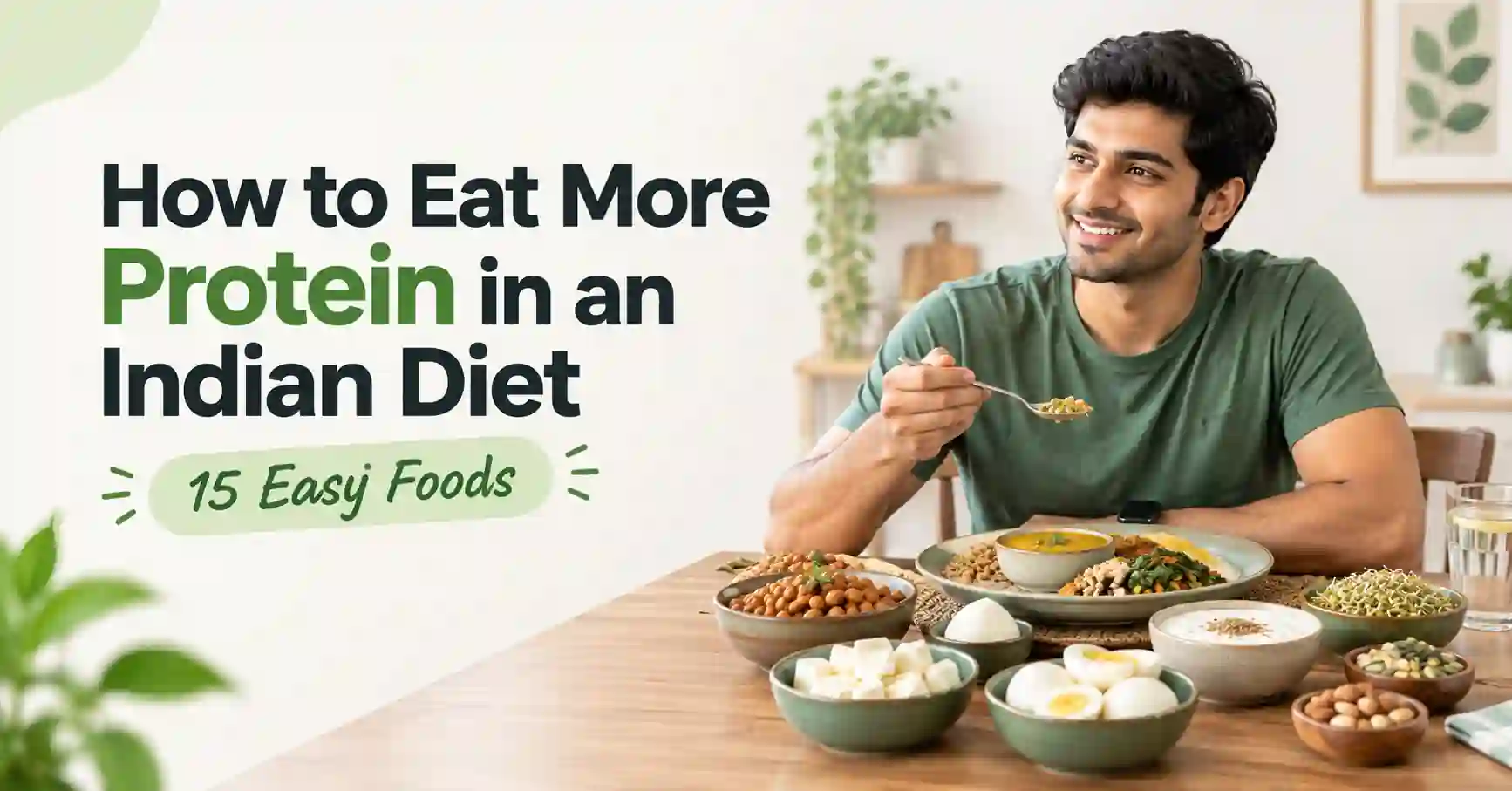
Protein rich foods in Indian diet do not have to mean eating chicken every day, drinking protein shakes or completely changing the meals your family already cooks.
For most people, the easier approach is to look at familiar foods differently.
Dal, chana, rajma, paneer, curd, soy, eggs, fish and chicken can all become part of a balanced Indian eating pattern. The real challenge is often not finding protein-rich foods—it is knowing which foods to choose, how much to eat and how to include them consistently across the day.
This guide covers 15 practical vegetarian and non-vegetarian options, simple breakfast ideas, meal combinations and a realistic way to think about your daily protein intake.
Editorial note: Protein requirements vary with age, body weight, activity level, pregnancy, health conditions and other factors. The food values in this guide are approximate and can vary by brand, portion size and cooking method. This article is for general educational purposes and is not a personalised nutrition plan.
Table of Contents
- Why Does Protein Matter in an Indian Diet?
- How Much Protein Should You Aim for?
- 15 Protein-Rich Foods in an Indian Diet
- Vegetarian Protein Sources
- Non-Vegetarian Protein Sources
- How to Increase Protein Intake Without Changing Your Entire Diet
- Indian Protein-Rich Breakfast Ideas
- How to Build a Protein-Rich Indian Plate
- A Simple One-Day High-Protein Indian Meal Plan
- Common Protein Mistakes to Avoid
- Do You Need Protein Powder?
- Frequently Asked Questions
- Build Your 30-Day Better Living Routine
- Final Takeaway
Why Does Protein Matter in an Indian Diet?
Protein is an essential nutrient used throughout the body. It contributes to the maintenance and repair of tissues and is involved in many biological processes.
For someone trying to eat better, protein is important—but it should not be viewed in isolation.
A nutritious meal still needs variety.
Think about a traditional Indian meal:
Dal + roti + sabzi + curd
Instead of thinking that the meal is “carbs with a little protein,” you can deliberately increase the protein component while keeping vegetables, whole grains and other nutritious foods on the plate.
For example:
- Add a larger serving of dal.
- Include curd or Greek yogurt.
- Add paneer or tofu to a vegetable dish.
- Choose a besan or moong-dal breakfast.
- Add eggs if you eat them.
- Include fish or chicken at lunch or dinner if you eat non-vegetarian foods.
This approach fits with the broader principle of choosing varied protein sources rather than relying on one food. Protein foods also come with other nutrients such as fibre, fats, vitamins and minerals, so the overall food choice matters—not just the number of grams of protein.
If weight management is also one of your goals, you can read our healthy eating guide for weight loss for a broader look at balanced food choices.
How Much Protein Should You Aim for?
This is where many people become confused.
You may see extremely high protein targets online, especially on bodybuilding and fitness websites. But not everyone needs a bodybuilding-style protein intake.
The current ICMR–National Institute of Nutrition guidance gives a general protein RDA of 0.83 g per kg of body weight per day for healthy adults.
For example:
| Body weight | Approx. RDA using 0.83 g/kg |
| 50 kg | 42 g/day |
| 55 kg | 46 g/day |
| 60 kg | 50 g/day |
| 65 kg | 54 g/day |
| 70 kg | 58 g/day |
| 75 kg | 62 g/day |
| 80 kg | 66 g/day |
These numbers are general reference values, not personalised targets.
Your requirements may differ if you are highly active, strength training regularly, pregnant, older, recovering from illness, underweight, managing a medical condition or following a specialised diet.
A practical way to think about protein
Instead of obsessing over one perfect number, start by asking:
“Does every main meal contain a meaningful protein source?”
For example:
Breakfast: Moong dal chilla + curd
Lunch: Dal + rice/roti + vegetables
Snack: Roasted chana + milk/curd
Dinner: Paneer/tofu OR eggs/chicken/fish + vegetables + roti/rice
This makes increasing protein much easier than trying to calculate every gram from the beginning.
15 Protein-Rich Foods in Indian Diet
The following list combines familiar vegetarian and non-vegetarian foods that can be incorporated into everyday Indian meals.
Protein values are approximate because varieties, serving sizes and cooking methods differ.
| Food | Type | Approximate protein* | Easy Indian use |
| Moong dal | Vegetarian | ~7–9 g/100 g cooked | Dal, chilla, khichdi |
| Chana | Vegetarian | ~8–9 g/100 g cooked | Chole, salad, snack |
| Rajma | Vegetarian | ~8–9 g/100 g cooked | Rajma chawal |
| Soy chunks | Vegetarian | High when measured dry | Curry, pulao, keema-style dishes |
| Tofu | Vegetarian | ~12–15 g/100 g | Sabzi, stir-fry, bhurji |
| Paneer | Vegetarian | ~18–20 g/100 g | Paneer bhurji, curry |
| Curd/Greek yogurt | Vegetarian | Varies by product | Raita, bowl, snack |
| Besan | Vegetarian | ~20–22 g/100 g dry | Chilla, cheela, kadhi |
| Peanuts | Vegetarian | ~25–26 g/100 g | Chutney, snack, poha |
| Eggs | Non-vegetarian | ~6–7 g/egg | Omelette, bhurji, boiled |
| Chicken | Non-vegetarian | ~25–31 g/100 g cooked | Curry, grilled, tikka |
| Fish | Non-vegetarian | ~20–25 g/100 g | Curry, grilled, tawa |
| Prawns | Non-vegetarian | ~20–24 g/100 g | Curry, stir-fry |
| Lean mutton/goat | Non-vegetarian | ~24–26 g/100 g cooked | Curry, kebab |
| Milk | Vegetarian | ~8 g/cup | Breakfast, smoothie, drink |
*Approximate values. Actual protein content varies according to the food variety, preparation and serving size.
8 Easy Vegetarian Protein Sources
1. Moong Dal
Moong dal is one of the easiest ways to increase protein in a traditional Indian diet.
You can use it as:
- Moong dal
- Moong dal chilla
- Moong sprouts
- Moong dal khichdi
- Dal-based soup
For breakfast, two medium moong dal chillas with curd can create a much more protein-focused meal than a breakfast consisting mainly of refined carbohydrates.
2. Chana
Chickpeas are versatile, affordable and easy to incorporate into Indian meals.
Try:
- Chole
- Kala chana curry
- Chana salad
- Roasted chana
- Chana chaat
If you usually reach for biscuits or namkeen in the evening, roasted chana can be a simple food swap.
3. Rajma
Rajma is already part of many Indian households.
A bowl of rajma with rice provides a combination of legumes and grains. You can also use rajma in salads or bowls.
The important point is not to think of rice as something that must automatically be eliminated. Instead, create a more balanced plate by giving protein-rich foods a meaningful place alongside vegetables and an appropriate carbohydrate portion.
4. Soy Chunks
Soy chunks are particularly useful when you want a concentrated vegetarian protein option.
You can add them to:
- Soy curry
- Pulao
- Biryani-style dishes
- Mixed vegetable curry
- Soy keema
- Stuffed parathas
Because dry soy chunks are particularly protein-dense, check the nutrition label and serving size when calculating your intake.
5. Tofu
Tofu can work well for people who want a plant-based alternative to paneer.
Try tofu:
- In bhurji
- With mixed vegetables
- In a curry
- In a stir-fry
- In a wrap or sandwich
If you are vegetarian or vegan, tofu can make meal planning easier because it provides a concentrated protein source without relying entirely on dal.
6. Paneer
Paneer is a familiar Indian vegetarian protein source and can be extremely convenient.
Options include:
- Paneer bhurji
- Paneer tikka
- Palak paneer
- Paneer and vegetable curry
- Paneer stuffed roti
However, paneer can also be relatively calorie-dense depending on its fat content and preparation.
So “more protein” does not automatically mean “unlimited paneer.”
Portion size and the overall meal still matter.
7. Curd or Greek Yogurt
Curd can be an easy protein addition to meals that are otherwise low in protein.
Use it as:
- Plain curd with lunch
- Raita
- Greek yogurt with fruit
- Yogurt bowl with seeds
- Dip with roasted chana or vegetables
Greek yogurt or strained yogurt can contain considerably more protein than ordinary curd, depending on the product.
Check the nutrition label rather than assuming all yogurt products contain the same amount.
8. Besan
Besan, or gram flour, is an underrated ingredient for increasing protein in an Indian breakfast.
Try making:
Besan chilla + curd + vegetables
You can also add onions, tomatoes, coriander, spinach or other vegetables to increase variety.
This is a particularly useful option for someone searching for an Indian protein-rich breakfast without eggs.
7 Easy Non-Vegetarian Protein Sources
If you eat animal-based foods, you have additional convenient options.
9. Eggs
Eggs are one of the easiest foods to add to breakfast.
Try:
- Vegetable omelette
- Egg bhurji
- Boiled eggs
- Egg sandwich
- Egg with roti
- Egg and vegetable wrap
One egg provides roughly 6–7 g of protein, although the exact amount varies with size.
A vegetable omelette can therefore become a simple protein-focused breakfast without requiring complicated preparation.
10. Chicken
Chicken is a concentrated protein source and can fit naturally into Indian cooking.
You don’t need to eat plain grilled chicken every day.
Consider:
- Home-style chicken curry
- Tandoori chicken
- Chicken tikka
- Chicken and vegetable stir-fry
- Chicken salad
- Chicken with roti and vegetables
Pay attention to how the chicken is prepared. A protein-rich ingredient can become a very different meal when heavily fried or covered in a calorie-dense sauce.
11. Fish
Fish provides protein and, depending on the variety, can also provide beneficial fats such as omega-3 fatty acids.
Indian options include:
- Rohu
- Katla
- Pomfret
- Surmai
- Sardines
- Mackerel
- Salmon where available
Use preparation methods such as grilling, baking, steaming or a moderate-oil curry when you want to keep the overall meal balanced.
12. Prawns
Prawns can provide a substantial amount of protein in a relatively small serving.
They work well in:
- Prawn curry
- Prawn stir-fry
- Prawn masala
- Prawn and vegetable dishes
As with any protein source, the cooking method and accompanying ingredients influence the nutritional profile of the final meal.
13. Lean Mutton or Goat Meat
Mutton and goat meat can contribute protein, iron and other nutrients.
However, they can also contain more saturated fat depending on the cut and preparation.
If you enjoy mutton, focus on reasonable portions and balance the meal with vegetables and other nutritious foods rather than treating meat as the entire plate.
14. Milk
Milk is vegetarian and often overlooked when people discuss protein.
A cup of milk provides roughly 8 g of protein, depending on the type.
It can be used with:
- Breakfast
- Oats
- Homemade smoothies
- Tea or coffee
- A small evening snack
Choose unsweetened versions when possible if you are trying to reduce added sugar.
15. Peanuts
Peanuts are technically legumes, but they are commonly treated as nuts in everyday eating.
They can provide protein along with healthy fats.
Try:
- Roasted peanuts
- Peanut chutney
- Peanut poha
- Peanut salad
- Homemade peanut-based snacks
Remember that peanuts are energy-dense, so a small portion can go a long way.
How to Increase Protein Intake Without Changing Your Entire Diet
You don’t need to replace your entire Indian diet.
Instead, upgrade meals you already eat.
Instead of:
Poha alone
Try:
Poha + peanuts + curd
Instead of:
2 rotis + sabzi
Try:
2 rotis + dal + sabzi + curd
Instead of:
Plain paratha
Try:
Besan/moong chilla + curd
Instead of:
Rice + small amount of dal
Try:
Rice + a meaningful serving of dal + vegetables + curd
Instead of:
Tea + biscuits
Try:
Milk/curd + roasted chana
Instead of:
Plain vegetable sandwich
Try:
Paneer/tofu/egg vegetable sandwich
The idea is simple:
Don’t remove familiar foods. Add a reliable protein source to the meal.
This is often much easier to maintain than completely changing your cuisine.
Indian Protein-Rich Breakfast Ideas
Breakfast is one of the easiest meals to improve because many common Indian breakfasts are predominantly carbohydrate-based.
Here are practical combinations:
| Breakfast | Protein addition |
| Poha | Peanuts + curd |
| Upma | Peanuts + curd |
| 2 moong dal chillas | Curd |
| 2 besan chillas | Curd |
| Vegetable omelette | Whole-wheat roti |
| Egg bhurji | Roti |
| Idli | Sambar + curd |
| Dosa | Sambar + curd |
| Oats | Milk + seeds/curd |
| Paratha | Curd + paneer/egg side |
You don’t have to eat a “fitness breakfast.”
A normal Indian breakfast can become more protein-rich with one or two smart additions.
How to Build a Protein-Rich Indian Plate
A useful starting framework is:
1. Choose your protein
Examples:
- Dal
- Chana
- Rajma
- Paneer
- Tofu
- Soy
- Curd
- Eggs
- Chicken
- Fish
2. Add vegetables
Include seasonal vegetables, leafy greens or a salad.
3. Add a carbohydrate source
Depending on your meal and needs:
- Roti
- Rice
- Oats
- Dalia
- Millets
- Potato or other starchy vegetables
4. Add a suitable amount of healthy fat
Examples include nuts, seeds or cooking oils used in reasonable amounts.
This approach keeps the meal balanced rather than turning every plate into a protein-only meal.
Harvard’s nutrition guidance similarly emphasises the importance of the overall “protein package”—what comes with the protein, such as fibre and fats—not merely the protein number itself.
A Simple One-Day High-Protein Indian Meal Plan
This is an example structure, not a personalised diet chart.
Breakfast
2 moong dal chillas + curd + vegetables
Mid-morning
Fruit + a small portion of roasted chana
Lunch
Dal + rice or 2 rotis + seasonal vegetables + curd
Evening snack
Milk or Greek yogurt + a small portion of peanuts
Dinner — vegetarian
Tofu/paneer vegetable curry + 2 rotis + salad
Dinner — non-vegetarian alternative
Chicken/fish + 2 rotis or rice + vegetables
The important pattern is that protein appears repeatedly throughout the day instead of being concentrated into one dinner.
If you are also working on weight management, you can combine better meal planning with regular movement. InfuseUrLife’s 30-day walking challenge provides a gradual approach to building a more active routine.
Common Protein Mistakes to Avoid
1. Thinking only non-vegetarian food contains protein
Dal, beans, soy, tofu, paneer, curd, milk, nuts and seeds can all contribute protein.
Vegetarian eating requires variety and intentional meal planning—not necessarily meat.
2. Depending on only one protein source
Eating paneer every day is not the same as having a varied diet.
Rotate between:
Dal → chana → rajma → soy → tofu → paneer → curd
and, if you eat non-vegetarian foods:
Eggs → fish → chicken → other suitable options.
3. Forgetting portion size
A food can be protein-rich but still contribute substantial calories.
This is particularly relevant for foods such as paneer, peanuts, nuts and seeds.
4. Replacing vegetables with protein
Protein is important, but vegetables, fruits, whole grains and healthy fats still have a role.
The goal is a balanced diet—not a protein-only diet.
5. Assuming expensive foods are necessary
You don’t need imported protein bars or expensive “superfoods” to improve your protein intake.
Indian kitchens already contain affordable options such as:
- Dal
- Chana
- Rajma
- Besan
- Soy
- Peanuts
- Milk
- Curd
- Eggs
6. Starting with an extreme target
More protein is not automatically better.
Start with a realistic goal: include a protein source in each major meal, then adjust according to your individual requirements.
Do You Need Protein Powder?
Not necessarily.
For many healthy adults, protein can be obtained through ordinary foods.
Protein powder can be convenient in certain situations, particularly when someone’s dietary requirements are difficult to meet through food alone, but it is not a compulsory part of a healthy Indian diet.
Before using a supplement, consider:
- Your actual protein intake
- Your food preferences
- Your activity level
- Your budget
- The ingredient and nutrition label
- Any medical conditions or dietary restrictions
Whole foods also provide nutrients beyond protein.
If you have kidney disease or another medical condition requiring dietary management, speak with a qualified healthcare professional or registered dietitian before substantially increasing protein intake.
Frequently Asked Questions
What are the best protein-rich foods in an Indian diet?
Common options include dal, chana, rajma, soy chunks, tofu, paneer, curd, milk, besan, eggs, chicken and fish. The best choices for you depend on your dietary preferences, nutritional needs, budget and health requirements.
How can I increase protein intake as a vegetarian?
Start by adding a protein source to each major meal. Examples include moong dal chilla and curd at breakfast, dal and curd at lunch, roasted chana as a snack and paneer, tofu or soy at dinner.
What is a good Indian protein-rich breakfast?
Moong dal chilla with curd, besan chilla with yogurt, egg bhurji with roti, vegetable omelette, idli with sambar or oats with milk are practical options.
How much protein should an adult eat per day?
The ICMR–NIN RDA for healthy adults is 0.83 g/kg body weight/day. For example, this works out to approximately 54 g per day for a 65-kg adult. Individual requirements can be different.
Can vegetarians get enough protein without supplements?
Yes. A varied vegetarian diet can include protein from dal, beans, soy, tofu, paneer, curd, milk, besan, peanuts, nuts and seeds.
Is dal enough to meet protein needs?
Dal is an excellent part of an Indian diet, but relying on one food is unnecessary. Combining different protein sources throughout the day makes it easier to build a varied diet.
Is paneer good for increasing protein?
Paneer can be a useful vegetarian protein source, but portion size matters because paneer can also be relatively energy-dense. Combine it with vegetables and an appropriate carbohydrate source.
Are eggs a good protein source?
Yes. Eggs provide high-quality protein and are convenient for breakfast, snacks or meals. One large egg typically provides around 6–7 g of protein.
Do I need protein after exercise?
Protein contributes to muscle maintenance and repair, but your total daily diet matters more than treating one specific meal as a magical “protein window.” A balanced meal or snack containing protein after exercise can be practical.
Can increasing protein help with weight management?
Protein can contribute to satisfying meals and help support muscle maintenance, but weight management depends on the overall dietary pattern, energy intake, physical activity and individual circumstances.
Build Your 30-Day Better Living Routine
Eating more protein does not require a completely new lifestyle.
Start with one meal.
Then improve another.
Add dal to lunch. Choose a protein-rich breakfast. Keep roasted chana available for snacks. Add curd to a meal. Include tofu, paneer, eggs, fish or chicken according to your preferences.
Small changes become much easier to maintain when you track them.
Download the 30-Day Better Living Planner from InfuseUrLife and use it to track your meals, physical activity, daily habits and progress throughout the month.
[Download the 30-Day Better Living Planner]
Small food choices. Consistent habits. A healthier routine.
Live better. Live smarter. Every day.
Final Takeaway
You don’t need to abandon traditional Indian food to eat more protein.
The Indian diet already offers a wide range of protein-rich foods—from dal, chana, rajma, soy, tofu and paneer to eggs, chicken and fish.
The bigger opportunity is to make protein a deliberate part of your meals.
Instead of asking:
“What high-protein diet should I follow?”
start by asking:
“Where is the protein in my next meal?”
Choose one source, combine it with vegetables and an appropriate carbohydrate, and repeat the habit consistently.
That’s a much more practical way to build a protein-rich Indian diet.
Disclaimer: This Blog Post provides general educational information and is not a substitute for personalised medical or nutritional advice. People with kidney disease, diabetes, pregnancy-related nutritional needs, eating disorders, other medical conditions, or specific dietary requirements should consult an appropriately qualified healthcare professional or registered dietitian before making major dietary changes.
References:
Recommended Dietary Allowances / Nutrient Requirements for Indians
Harvard Nutrition Source — Protein
CDC — How to Have Healthier Meals and Snacks
Harvard — 5 Quick Tips for Choosing Healthy Protein Foods