
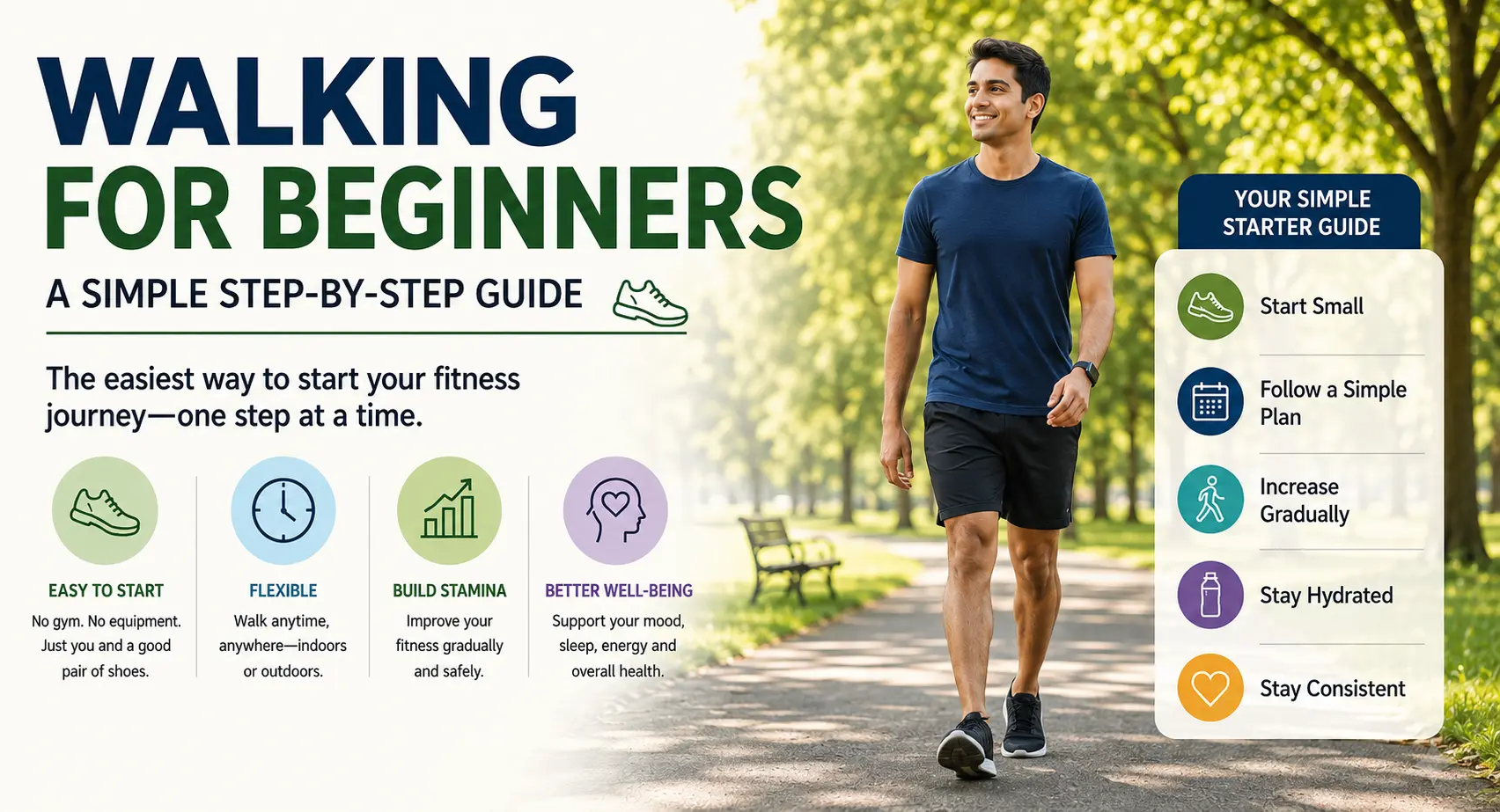
Walking for Beginners: A Simple Step-by-Step Guide
If you have not exercised regularly for a while, walking can be one of the simplest ways to start moving again. You do not need a gym membership, complicated equipment, or an ambitious fitness goal. You can begin with a short walk and build from there.
The key for beginners is not to walk as far or as fast as possible on day one. It is to create a routine that feels manageable enough to repeat.
A regular walking habit can contribute to your overall physical activity, and brisk walking can count toward the recommended weekly amount of moderate-intensity aerobic activity. Adults are generally advised to work toward at least 150 minutes of moderate-intensity aerobic activity each week, along with muscle-strengthening activity on at least two days.
If you are wondering how to start walking, this guide gives you a simple beginner walking plan, practical preparation tips, and a gradual way to increase your walking time.
Why walking is a practical starting point
Walking is a useful starting point because it is simple, accessible and easy to adapt to different fitness levels.
You can walk outdoors, indoors, around your neighborhood, at a shopping center, during a lunch break, or simply around your home. You can also divide your walking into shorter sessions when finding one continuous block of time is difficult.
For beginners, this flexibility matters.
The American Heart Association recommends starting slowly and gradually increasing the amount and intensity of activity. It also notes that even short periods of movement can add up throughout the day.
You also do not need to begin with a goal of 10,000 steps.
A better starting point is to look at what you are doing now and add a manageable amount of walking. If you currently spend most of your day sitting, even a 10-minute walk can be a meaningful first step.
If you want to understand the broader health benefits of making walking a regular habit, read our guide on Benefits of Walking Every Day.
What to do before your first walk
Your first walk does not need extensive preparation, but a few simple decisions can make it more comfortable and easier to repeat.
1. Choose a realistic time
Pick a time that fits naturally into your day.
You might walk:
- After breakfast
- During your lunch break
- After work
- After dinner
- While taking a phone call
- As part of your commute
The best time is usually the one you can repeat consistently.
2. Choose a safe route
For outdoor walking, choose a route where you can walk comfortably and safely.
Sidewalks, parks, walking tracks and pedestrian-friendly areas are preferable. If you are walking near traffic, stay alert and make sure you can see and hear what is happening around you. The AHA recommends using sidewalks or trails where possible and taking additional precautions when walking near roads or in low-light conditions.
3. Start with an easy pace
Your first few minutes should feel comfortable.
There is no need to immediately walk at a brisk pace. Give yourself time to settle into the movement, then gradually increase your pace if you feel comfortable.
A moderate pace generally means your breathing is faster, but you can still carry on a conversation.
4. Set a small first goal
Instead of saying, “I need to walk every day for an hour,” start with something you are confident you can complete.
For example:
Today: 10 minutes.
Once 10 minutes becomes comfortable, you can gradually increase the duration.
Beginner walking plan
A beginner walking plan should build consistency before worrying about speed or distance.
The following four-week schedule is a practical starting framework. It is not a rigid prescription; adjust it according to your current fitness, schedule and comfort.
Printable beginner walking schedule
| Week | Walking plan | Suggested focus |
| Week 1 | 10–15 minutes, 4–5 days | Get comfortable with the habit |
| Week 2 | 15–20 minutes, 4–5 days | Build consistency |
| Week 3 | 20–25 minutes, 5 days | Increase walking time |
| Week 4 | 25–30 minutes, 5 days | Establish a regular routine |
Week 1: Just get started
Your only priority during the first week is to become comfortable with walking regularly.
Try:
- 10–15 minutes per walk
- 4–5 walking days
- Easy, comfortable pace
- At least one rest day if needed
If 10 minutes feels difficult, start with 5–10 minutes.
You are building a habit, not testing your fitness.
Week 2: Add a little more time
Once your first week feels manageable, increase your walking time slightly.
Aim for:
- 15–20 minutes per walk
- 4–5 days per week
- Comfortable pace
- Optional short brisk sections if you feel ready
You can also split a walk into two shorter sessions.
For example:
10 minutes in the morning + 10 minutes in the evening.
Short bouts of activity can still contribute to your overall physical activity.
Week 3: Build endurance
By week three, the goal is to spend more total time walking rather than simply walking faster.
Try:
- 20–25 minutes
- Around 5 days per week
- Easy pace for the beginning
- Comfortable-to-brisk pace for part of the walk
You should still be able to control your breathing and maintain a sustainable pace.
Week 4: Establish your routine
If the previous weeks have felt comfortable, work toward:
- 25–30 minutes
- Around 5 days per week
- Gradually increasing the amount of brisk walking
Thirty minutes of moderate walking five days per week would total 150 minutes, matching the general weekly aerobic activity target for adults. You do not have to reach that amount immediately.
Printable quick checklist
- Choose a regular walking time
- Wear comfortable walking shoes
- Start at an easy pace
- Walk for your planned duration
- Increase gradually
- Record your walks
- Take rest days when needed
- Stop if you develop concerning symptoms
How to increase duration gradually
One of the biggest mistakes beginners make is increasing their walking time too quickly.
If you walk for 10 minutes comfortably today, that does not necessarily mean you should walk for 45 minutes tomorrow.
Instead, increase your duration in small steps.
For example:
10 minutes → 15 minutes → 20 minutes → 25 minutes → 30 minutes
Stay at a particular duration for several sessions if necessary.
You can also increase your activity by changing only one variable at a time. For example, increase the duration first and work on pace later.
The American Heart Association specifically recommends gradually increasing the amount and intensity of physical activity over time.
What about speed?
Speed should come after consistency.
For your first few walks, focus on getting comfortable with the movement. Once regular walking feels easier, introduce short periods of faster walking.
For example:
- 5 minutes easy
- 5 minutes comfortable-to-brisk
- 5 minutes easy
As your fitness improves, you can gradually increase the brisk portion.
There is no requirement to walk fast during every session.
Shoes, clothing and hydration
You do not need expensive equipment to start walking.
However, comfortable clothing and appropriate footwear can make the experience much better.
Choose comfortable shoes
Look for shoes that fit properly and feel comfortable while walking. Supportive walking shoes can be useful, particularly if you plan to walk regularly.
Avoid starting a new walking routine in footwear that causes rubbing, discomfort or instability.
Dress for the weather
Choose comfortable, breathable clothing appropriate for the temperature and conditions.
In hot weather, consider lighter clothing and plan your walk around the cooler parts of the day.
In colder weather, dress in layers so you can adjust as your body warms up.
Remember hydration
For longer walks, warm weather or situations where you are sweating more, carry water and drink according to your needs.
Hydration becomes particularly important when walking outdoors in hot or humid conditions.
Consider your surroundings
If you walk outdoors:
- Choose well-maintained paths where possible.
- Stay aware of traffic and other pedestrians.
- Use reflective or visible clothing in low-light conditions.
- Keep headphone volume low enough to hear your surroundings.
- Carry a phone if appropriate for your situation.
The AHA recommends staying aware of vehicles, bicycles and emergency sounds when walking outdoors.
Common mistakes
Walking is simple, but beginners can still make the process harder than it needs to be.
Starting too fast
Walking hard from the first minute can leave you exhausted and make the next session less appealing.
Start easily and build your pace gradually.
Trying to hit 10,000 steps immediately
10,000 steps is a popular target, but it is not a universal minimum requirement for health.
Instead of chasing a particular number, focus on increasing your movement from your current baseline. The U.S. Physical Activity Guidelines also emphasize time spent in moderate or vigorous activity rather than treating 10,000 steps as a requirement.
Making every walk a workout
Some walks can simply be easy movement.
An easy walk can help you establish the habit, break up sitting time and make physical activity feel less intimidating.
Increasing duration too quickly
If your body is not accustomed to regular activity, sudden increases can make you unnecessarily sore or uncomfortable.
Give your body time to adapt.
Ignoring persistent pain
Normal effort is different from significant or persistent pain.
If walking repeatedly causes pain in your feet, knees, hips, back or elsewhere, do not simply push through it. Stop and seek appropriate professional advice. The AHA specifically recommends discussing recurring pain with a healthcare professional.
When to stop and seek professional advice
Walking is suitable for many people, but a beginner walking plan should never override individual medical advice.
If you have a known medical condition, have recently had surgery or a cardiac event, or have been advised to restrict physical activity, speak with your healthcare professional before starting or increasing your exercise routine. The appropriate amount and intensity of activity can vary considerably between individuals.
During a walk, stop exercising and seek appropriate medical attention if you experience concerning symptoms such as significant chest discomfort, severe or unusual shortness of breath, fainting, severe dizziness, or other symptoms that are unusual for you.
Persistent or worsening pain should also not be ignored.
Safety note: This article provides general educational information and is not a substitute for medical advice. If you are unsure whether walking is appropriate for you, particularly if you have a medical condition or have been inactive for a long period, consult a qualified healthcare professional before starting a new exercise routine.
FAQs
How long should a beginner walk?
There is no single duration that works for everyone. Starting with around 10–15 minutes can be a practical option for someone who is new to regular activity. As walking becomes more comfortable, gradually increase the duration.
How many days a week should a beginner walk?
Four to five days per week is a reasonable structure for the beginner plan in this article, but you do not have to walk every day when starting out. Consistency matters more than forcing yourself to complete a walk when you are overly tired or uncomfortable.
Is 10 minutes of walking enough for a beginner?
Yes. Ten minutes can be an excellent starting point if you are currently inactive. The goal is to establish a repeatable habit and gradually increase your activity over time. Even short bouts of movement can contribute to your overall activity.
Should I walk every day as a beginner?
You can walk frequently if your body tolerates it, but you do not need to start with seven days a week. A few manageable sessions each week can be enough to establish the habit. Gradually build frequency and duration as your fitness improves.
Should beginners walk fast or slowly?
Start slowly. Once you feel comfortable, gradually increase your pace. A moderate-intensity pace should make you breathe harder while still allowing you to carry on a conversation.
Can I split my walking into shorter sessions?
Yes. You can divide your walking into shorter periods throughout the day. For example, two 10-minute walks may be easier to fit into your schedule than one 20-minute walk. Short bouts can add up toward your overall activity.
Do I need special equipment to start walking?
Usually, no. Comfortable, properly fitting footwear and weather-appropriate clothing are enough for most basic walking routines. You do not need a fitness tracker or expensive exercise equipment to begin.
Start with one step
Starting a walking routine does not require you to become highly fit first.
Start with the amount you can manage today.
For some people, that may be 10 minutes around the neighborhood. For others, it may be a short walk after lunch or a few minutes of movement around the house.
The important part is to make the first step small enough that you can repeat it.
As your walking becomes easier, gradually increase your time, distance or pace. Over time, those small sessions can become a regular part of your lifestyle. And if you want to turn that intention into a daily habit, download the 30-Day Better Living Planner and use it to track your walking routine, build consistency and make progress one day at a time.
References
https://www.cdc.gov/physical-activity-basics/guidelines/adults.html?utm_source=infuseurlife.com