
Get a Flat Belly Naturally: 30 Proven Ways for a Healthier 2026
Get a flat belly naturally by building sustainable habits around nutritious food, regular movement, strength training, adequate sleep and better stress management.
But before trying to flatten your stomach, there is one important fact to understand: you cannot choose exactly where your body loses fat.
Doing hundreds of crunches may strengthen your abdominal muscles, but it does not specifically burn the fat covering your stomach. Fat loss happens across the body, and where you lose it first is influenced by factors such as genetics, body composition and overall energy balance.
There is another issue that often gets confused with belly fat: bloating.
Your abdomen can temporarily look larger because of digestion, gas, constipation, fluid retention or certain foods. That is different from gaining body fat.
So, if your goal is to get a flatter-looking stomach in 2026, focus on what actually matters: improving your overall body composition, becoming more active, eating a balanced diet and managing habits that can contribute to bloating.
Evidence note: There is no guaranteed food, exercise, drink or supplement that will give everyone a completely flat stomach. The strategies below focus on evidence-supported habits for overall health, fitness and sustainable fat loss.
Table of Contents
- What Does a Flat Belly Really Mean?
- 30 Natural Ways to Get a Flat Belly
- What Does Not Work for Belly Fat?
- Flat Belly vs. Bloating
- A Simple 30-Day Starting Plan
- Frequently Asked Questions
- Final Takeaway
What Does a Flat Belly Really Mean?
A “flat belly” is not a precise medical or fitness measurement.
People usually use the term to describe a stomach with less visible abdominal fat or less temporary abdominal distension.
There are two major types of abdominal fat worth understanding.
Subcutaneous fat sits underneath the skin.
Visceral fat is stored deeper inside the abdominal cavity around internal organs. Higher amounts of visceral fat are associated with increased health risks, including cardiovascular and metabolic problems.
The objective should not be to eliminate all abdominal fat. Some body fat is normal and necessary.
Instead, focus on maintaining a healthy body composition and reducing excess body fat when appropriate.
Belly Fat Is Not the Same as Bloating
This distinction is particularly important.
If your stomach is larger after a heavy meal or at the end of the day, that does not necessarily mean you gained belly fat.
Bloating is usually temporary.
Belly fat develops over a much longer period.
That means strategies such as eating slowly, managing constipation or reducing excessive sodium may sometimes make your stomach look less distended, but they should not be presented as fat-burning techniques.
30 Natural Ways to Get a Flat Belly
1. Build Meals Around Whole Foods
Make minimally processed foods the foundation of your diet.
Include foods such as:
- Vegetables
- Fruits
- Whole grains
- Lentils
- Beans
- Eggs
- Fish
- Lean meats
- Dairy
- Tofu
- Nuts and seeds
You do not have to completely eliminate processed foods.
Instead, make nutritious foods your everyday default.
2. Create a Sustainable Calorie Deficit if You Need to Lose Fat
If you have excess body fat and want to lose weight, your overall energy intake needs to be appropriate for your body’s needs.
This does not mean starving yourself.
A sustainable calorie deficit is generally more practical than extreme restriction because it allows you to continue eating nutritious foods and maintaining your routine.
The goal is gradual, sustainable progress, not rapid weight loss at any cost.
3. Include Protein in Your Main Meals
Protein can help you feel satisfied and supports the maintenance of muscle during weight loss.
Good options include:
- Eggs
- Fish
- Chicken
- Curd or Greek yogurt
- Milk
- Paneer
- Tofu
- Soy
- Dal
- Chickpeas
- Beans
For example, a simple Indian meal of dal, vegetables, roti and curd can provide a much more useful foundation than relying on a “fat-burning” food or supplement.
4. Increase Fiber Gradually
Fiber can help support fullness and digestive health.
Useful sources include:
- Oats
- Lentils
- Beans
- Chickpeas
- Fruits
- Vegetables
- Whole grains
- Nuts
- Seeds
Increase fiber gradually.
A sudden increase can cause gas or bloating in some people, particularly when their usual diet contains very little fiber.
5. Reduce Added Sugar
Regularly consuming large amounts of added sugar can make it easier to consume excess calories.
Pay particular attention to:
- Sugary drinks
- Sweets
- Desserts
- Sweetened tea and coffee
- Packaged snacks
- Sweetened breakfast foods
You do not need to completely eliminate desserts.
Instead, reduce how frequently high-sugar foods and drinks appear in your everyday diet.
6. Replace Sugary Drinks
Drinks can contribute significant calories without making you feel as full as solid food.
Consider replacing regular soft drinks and heavily sweetened beverages with:
- Water
- Sparkling water
- Unsweetened tea
- Unsweetened coffee
- Other low-calorie options
This is one of the simplest dietary changes you can make if sugary drinks are currently part of your routine.
7. Choose Whole-Grain Carbohydrates More Often
Carbohydrates are not automatically responsible for belly fat.
Instead of eliminating carbohydrates, choose more nutrient-rich options when practical.
Examples include:
- Oats
- Brown rice
- Whole-wheat roti
- Barley
- Whole-grain bread
- Quinoa
The goal is to improve the overall quality of your diet rather than creating unnecessary food restrictions.
8. Include Healthy Fats in Sensible Portions
Healthy fats can be part of a balanced diet.
Good sources include:
- Nuts
- Seeds
- Peanuts
- Avocado
- Olive oil
- Fatty fish
However, healthy fats are still calorie-dense.
Eating unlimited amounts because a food is labelled “healthy” can still make weight loss difficult.
9. Eat More Slowly
Give yourself enough time to eat.
Put down your phone.
Chew your food thoroughly.
Pay attention to how your hunger changes during the meal.
Eating slowly may also reduce the amount of air swallowed while eating, which can be helpful for some people who experience gas or bloating.
10. Practice Mindful Eating
Mindful eating means becoming more aware of what and why you eat.
Before reaching for a snack, ask:
“Am I physically hungry, or am I eating because I am bored, stressed or simply because food is available?”
This does not mean judging yourself.
It simply helps you recognise patterns.
11. Plan Your Meals
Planning can make healthy eating easier.
You can prepare simple foods in advance:
- Cooked dal
- Chopped vegetables
- Boiled eggs
- Grilled chicken
- Tofu
- Curd
- Fruit
- Oats
Having convenient options available can reduce the temptation to rely on highly processed foods when you are very hungry.
12. Avoid Crash Diets
Crash diets may produce rapid changes on the scale, but that does not mean you have rapidly lost abdominal fat.
Some of the initial change can come from water and reduced food volume.
Extreme diets can also be difficult to maintain.
A better strategy is to build habits that you can continue for months.
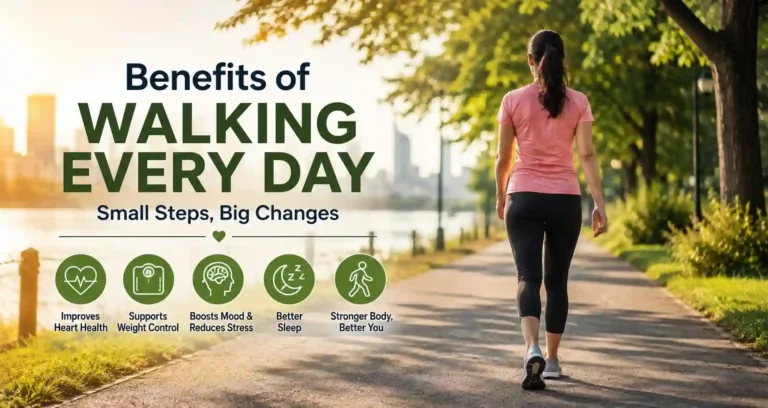
13. Walk Every Day
Walking is one of the simplest ways to increase your daily physical activity.
It requires little equipment and can fit into your commute, lunch break, evening routine or weekend activities.
Regular walking can support healthy weight management as part of an overall active lifestyle.
For a deeper look at how regular walking can fit into a healthy routine, read Benefits of Walking Every Day: Positive Changes When You Walk Daily.
14. Increase Your Daily Steps
You do not need to rely entirely on formal workouts.
Look for opportunities to move more during ordinary activities.
For example:
- Walk during phone calls.
- Take the stairs when practical.
- Park a little farther away.
- Walk during breaks.
- Walk to nearby destinations.
- Move around between tasks.
Our guide How to Increase Daily Steps Without a Gym provides 15 practical ways to make walking part of your existing routine.
The important point is that you do not need to jump from a low activity level directly to 10,000 steps.
Start from your current baseline and gradually increase your movement.
15. Walk After Meals
A short walk after a meal is an easy way to attach movement to an existing daily habit.
Instead of thinking:
“I need to find time to exercise.”
Think:
“After lunch, I walk for 10 minutes.”
That small change can make physical activity feel less like another task.
It is also a useful way to break up long periods of sitting.
16. Add Regular Cardio
Cardio includes activities such as:
- Brisk walking
- Cycling
- Swimming
- Running
- Dancing
- Hiking
- Aerobic workouts
Regular aerobic activity can support cardiovascular fitness and overall energy expenditure.
You do not have to choose the hardest activity.
Choose something you can perform consistently.
17. Add Resistance Training
Strength training can help maintain or build muscle while you work toward reducing body fat.
You can use:
- Bodyweight exercises
- Resistance bands
- Dumbbells
- Kettlebells
- Weight machines
If you are new to strength training, start with basic movements and focus on technique.
For a practical starting point, see Home Workout for Beginners: Where Should You Start?.
18. Strengthen Your Core
Core exercises can strengthen your abdominal muscles and improve stability.
Examples include:
- Planks
- Dead bugs
- Bird dogs
- Controlled crunch variations
- Side planks
But remember:
Core exercises do not selectively burn belly fat.
They strengthen the muscles underneath it.
If your overall body fat decreases, stronger abdominal muscles may become more visible.
19. Try HIIT if It Suits Your Fitness Level
High-intensity interval training alternates periods of harder exercise with recovery periods.
It can be an efficient workout option for people who enjoy higher-intensity exercise.
But HIIT is not essential for getting a flatter stomach.
If you are new to exercise, start with manageable activity and gradually increase the challenge.
20. Break Up Long Periods of Sitting
An hour of exercise does not automatically make the remaining hours of sitting irrelevant.
If you work at a desk, take short movement breaks.
Try:
- Walking between tasks
- Standing during some phone calls
- Taking the stairs
- Walking during lunch
- Stretching between work sessions
Think of exercise and everyday movement as two parts of the same active lifestyle.
21. Get Enough Sleep
Sleep is an important part of healthy weight management.
Most adults should aim for at least seven hours of sleep per night.
Poor sleep can affect appetite, food choices, energy and your ability to maintain healthy habits.
A practical goal is to create a consistent sleep and wake-up schedule.
22. Manage Chronic Stress
Stress is part of life.
The goal is not to eliminate every stressful situation.
Instead, develop healthier ways of managing it.
You might try:
- Walking
- Meditation
- Deep breathing
- Yoga
- Hobbies
- Time outdoors
- Social connection
Stress can also influence eating behaviour and sleep, which can indirectly make healthy weight management more difficult.
23. Stay Hydrated
Water is essential for normal body functions.
Adequate hydration can also support comfortable digestion.
However, water does not directly melt belly fat.
You also do not need a special “detox water” to remove toxins from your body.
If adding lemon, cucumber or mint makes water more enjoyable, that is perfectly fine.
Just treat it as flavoured water—not a fat-burning treatment.
24. Limit Alcohol
Alcohol can contribute calories and may make it easier to overeat.
It can also interfere with sleep depending on the amount and timing.
If you drink alcohol, reducing your intake can be one practical lifestyle change that supports your broader health and weight-management goals.
25. Review Your Evening Eating Habits
Eating after a particular clock time does not automatically create belly fat.
The bigger concern is whether late-night eating regularly causes you to consume more calories than you need.
If evenings are when you tend to overeat, try:
- Eating a satisfying dinner.
- Planning a suitable snack if you are genuinely hungry.
- Keeping highly tempting foods less accessible.
- Establishing a consistent bedtime.
26. Track Your Habits
You do not need to count every calorie forever.
Instead, track a few behaviours for one or two weeks.
| Habit | What You Can Track |
|---|---|
| Movement | Daily steps or active minutes |
| Exercise | Cardio and strength sessions |
| Food | Meals and snacks |
| Sleep | Hours slept |
| Hydration | Water intake |
| Progress | Waist measurement or another suitable measure |
The purpose is not to become obsessive.
It is to identify patterns.
27. Reduce Excess Sodium if You Experience Bloating
A high-sodium meal can cause temporary water retention in some people.
If you regularly consume highly salted packaged foods, reducing them may help with temporary puffiness.
But remember:
Less water retention is not the same as less body fat.
This is mainly a bloating and fluid-balance consideration.
28. Identify Foods That Trigger Bloating
If your stomach repeatedly becomes distended after certain meals, pay attention to the pattern.
A simple food-and-symptom record can help you identify potential triggers.
However, do not unnecessarily eliminate large food groups based on internet advice.
Persistent, painful or unexplained digestive symptoms deserve professional medical attention.
29. Choose an Eating Pattern You Can Maintain
There is no mandatory “flat belly diet.”
A sustainable eating pattern should provide adequate nutrition and fit your preferences, culture, budget and lifestyle.
For example, a balanced Indian meal can include:
Dal + seasonal vegetables + roti or rice + curd + a source of healthy fat.
You do not need expensive supplements or imported “superfoods” to eat well.
30. Stay Consistent
You do not need to implement all 30 habits tomorrow.
Start with three.
For example:
- Walk regularly.
- Improve the quality of your main meals.
- Add two strength-training sessions each week.
Once these habits become normal, build from there.
Consistency beats intensity when intensity cannot be maintained.
What Does Not Work for Belly Fat?
Understanding ineffective strategies is just as important as knowing what to do.
Spot Reduction
You cannot tell your body to burn fat exclusively from your stomach.
Abdominal exercises strengthen the core, but they do not selectively remove abdominal fat.
Detox Drinks
Lemon water, cucumber water and infused water can help make hydration more enjoyable.
They are not magical detoxification or belly-fat-burning treatments.
“Fat-Burning” Supplements
Be cautious with products promising rapid abdominal fat loss.
Supplements should not replace a balanced diet, regular activity and appropriate medical advice.
Extreme Fasting
Intermittent fasting can be one eating pattern that some people choose, but it is not necessary for everyone.
The most important factor is whether your overall eating pattern supports your nutritional and health needs.
Hundreds of Crunches
More crunches do not automatically mean less belly fat.
Train your core for strength—not because you expect it to selectively burn abdominal fat.
Flat Belly vs. Bloating
If your stomach looks different throughout the day, consider whether bloating may be contributing.
Bloating can be associated with:
- Large meals
- Gas
- Constipation
- Eating quickly
- Certain foods
- Food intolerances
- Changes in fluid balance
A person can have relatively low body fat and still experience bloating.
That is why the solution should depend on the underlying issue.
If bloating is persistent, painful or accompanied by other concerning symptoms, speak with a healthcare professional.
A Simple 30-Day Starting Plan
Trying all 30 strategies at once is unnecessary.
Use this four-week approach instead.
| Week | Main Focus | Simple Goal |
| Week 1 | Movement | Walk regularly and interrupt long periods of sitting |
| Week 2 | Nutrition | Add protein, vegetables and fiber-rich foods |
| Week 3 | Fitness | Add resistance training and/or cardio |
| Week 4 | Recovery | Improve sleep, stress management and consistency |
Daily Better-Belly Checklist
- Eat mostly minimally processed foods
- Include protein in main meals
- Eat vegetables or fruit
- Drink enough water
- Move throughout the day
- Complete your planned walk or workout
- Limit sugary drinks
- Get adequate sleep
- Manage stress
- Repeat tomorrow
The objective is not perfection.
It is creating a routine you can actually maintain.
Frequently Asked Questions
How can I get a flat belly naturally?
To get a flat belly naturally, focus on sustainable habits that support overall fat loss and fitness. Eat a balanced diet, consume adequate protein and fiber, stay active, perform resistance training, sleep well and manage stress.
You cannot specifically choose to lose fat only from your stomach.
What is the best exercise for belly fat?
There is no single best exercise.
Walking, running, cycling, swimming, resistance training and appropriately programmed HIIT can all contribute to an active lifestyle.
Core exercises can strengthen your abdominal muscles but do not selectively burn belly fat.
Can walking reduce belly fat?
Regular walking can increase physical activity and support healthy weight management.
It can be particularly useful because it is accessible and easy to incorporate into everyday life.
Can I get a flat stomach without going to the gym?
Yes.
Walking, bodyweight exercises, resistance bands, cycling and home workouts can all contribute to a healthy fitness routine.
A gym is useful for some people, but it is not a requirement.
Does lemon water burn belly fat?
No.
Lemon water can be a refreshing way to drink water, but it is not a proven belly-fat-burning treatment.
Do crunches reduce belly fat?
No.
Crunches strengthen your abdominal muscles but do not selectively remove abdominal fat.
How long does it take to lose belly fat?
There is no universal timeline.
Your progress depends on factors including your starting body composition, food intake, activity, sleep, genetics and overall health.
Focus on sustainable progress rather than an arbitrary deadline.
Can bloating make my stomach look bigger?
Yes.
Bloating can temporarily increase abdominal fullness and make the stomach look larger.
That is different from an increase in body fat.
Your 30-Day Better Living Challenge
You now have 30 strategies.
But reading them is the easy part.
Turning them into daily habits is where the real progress happens.
You do not need to overhaul your entire lifestyle overnight.
Instead, choose a few habits that fit your current routine and track them consistently.
For example:
Week 1: Walk every day and increase your daily movement.
Week 2: Improve your meals by adding more protein, vegetables and fiber-rich foods.
Week 3: Add structured exercise.
Week 4: Focus on sleep, stress management and consistency.
Ready to turn these ideas into habits?
Use the InfuseUrLife 30-Day Better Living Planner to make your healthy-living goals more practical and trackable.
Instead of simply reading about better habits, use the planner to create a simple daily routine around movement, nutrition, hydration, sleep and other healthy behaviours.
Your goal isn’t to be perfect for 30 days. Your goal is to build habits that can continue beyond them.
Final Takeaway
If you want to get a flat belly naturally, do not look for a single food, drink, workout or supplement.
Focus on the fundamentals:
Eat well. Move regularly. Strengthen your body. Sleep enough. Manage stress. Stay consistent.
And remember the three concepts that are often confused:
Fat loss is not the same as core strengthening.
Core strengthening is not the same as reducing bloating.
Reducing bloating is not the same as losing body fat.
Understanding these differences can help you avoid misleading fitness promises and focus on habits that actually support better health.
A flatter stomach may be one outcome of improving your body composition and lifestyle, but it should not be your only measure of progress.
Better living is not about quick fixes. It is about building habits you can keep.
References:
https://www.medicalnewstoday.com/articles/324636
https://www.healthline.com/nutrition/get-a-flat-stomach
https://health.clevelandclinic.org/tips-for-losing-belly-fat
https://www.rush.edu/news/losing-belly-fat