
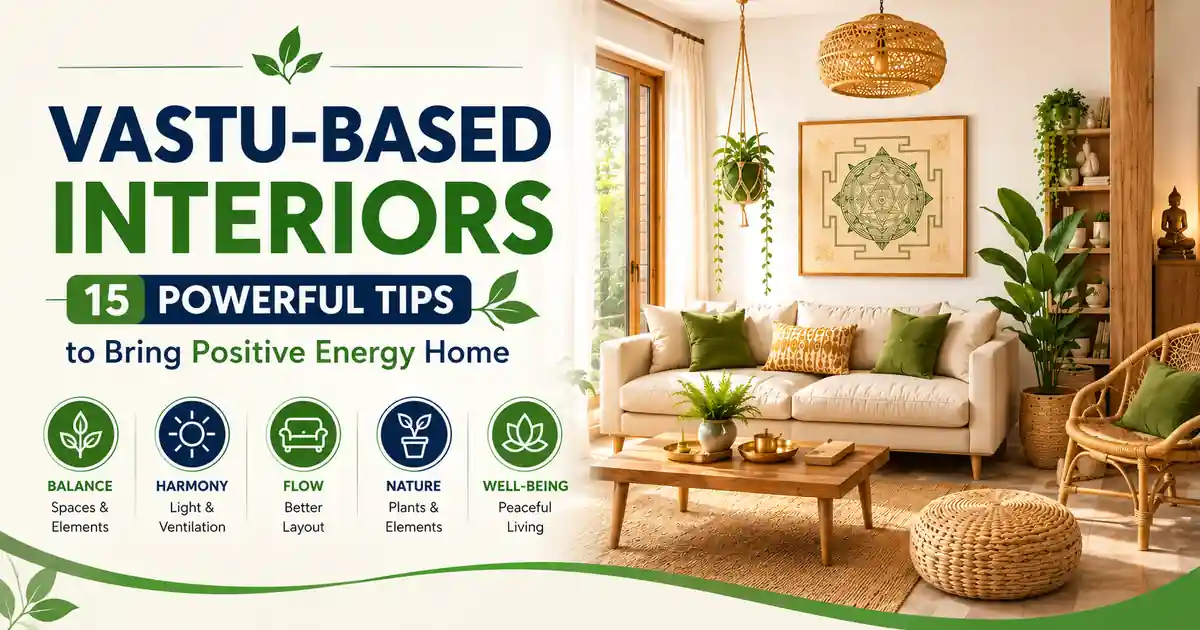
Vastu-Based Interiors: 15 Powerful Tips to Bring Positive Energy Home
Vastu-Based Interiors can help you create a home that feels more balanced, organised, welcoming and connected to traditional Indian design principles.
For many people, Vastu Shastra is an important cultural and architectural philosophy used when planning homes and arranging interiors. Its principles traditionally consider directions, spatial balance, natural elements, light, ventilation and the placement of important areas within a home.
At the same time, it is important to understand that Vastu is a traditional belief system and design philosophy. Claims that a particular furniture placement can guarantee wealth, success or health are matters of belief rather than scientifically established facts.
However, many Vastu-inspired ideas overlap with practical interior-design principles that can genuinely improve how a home feels and functions. Natural light, good ventilation, organised spaces, thoughtful furniture placement and a clutter-free environment can all contribute to a more comfortable living experience.
In this guide, you’ll discover practical ways to use Vastu-Based Interiors while keeping your home functional, modern and suited to your lifestyle.
Table of Contents
- What Are Vastu-Based Interiors?
- Understanding the Core Principles of Vastu Shastra
- Start With a Clean and Clutter-Free Home
- Make the Entrance Feel Welcoming
- Use Natural Light and Ventilation
- Choose Colours Thoughtfully
- Arrange Furniture for Better Flow
- Create a Balanced Living Room
- Design a Calming Bedroom
- Add Plants and Natural Elements
- Use Mirrors Carefully
- Choose Meaningful Art and Decor
- Create a Peaceful Meditation or Prayer Space
- Use Lighting to Improve Your Home’s Ambience
- Use Natural Materials Where Practical
- Don’t Turn Vastu Into a Source of Fear
- Combine Traditional Vastu With Modern Interior Design
- A Simple Vastu-Based Interiors Checklist
- Ready to Create a More Balanced Home?
- Frequently Asked Questions
- The Bottom Line
What Are Vastu-Based Interiors?
Vastu-Based Interiors use ideas inspired by Vastu Shastra when planning and decorating indoor spaces.
Vastu Shastra is a traditional Indian architectural system that considers the relationship between people, buildings, directions and the natural environment.
In interior design, this can influence decisions about room placement, furniture arrangement, natural light, ventilation, colours, decorative elements, open space and the use of natural materials.
Modern Vastu-inspired interior design does not necessarily mean following rigid rules. Instead, many homeowners use Vastu principles as a framework for creating spaces that feel balanced, functional, organised, comfortable, calm and connected to nature.
Understanding the Core Principles of Vastu Shastra
Traditional Vastu philosophy is commonly associated with the five elements, often referred to as Panchabhutas.
| Element | Traditional Association |
| Earth | Stability and grounding |
| Water | Flow and movement |
| Fire | Energy and transformation |
| Air | Movement and circulation |
| Space | Openness and balance |
For a modern reader, the most useful takeaway is simple: your home should feel balanced and functional rather than crowded, dark or uncomfortable. You do not need to renovate your entire house to apply this idea.
1. Start With a Clean and Clutter-Free Home
One of the most practical ideas associated with Vastu-Based Interiors is maintaining an organised living environment.
Clutter can make rooms feel smaller, visually overwhelming and difficult to use.
Start with unused furniture, broken decorative items, old boxes, excessive wall decor, items blocking walkways and unnecessary objects around entrances.
If an item has no practical purpose or personal value, consider whether it really needs to occupy your space. A home does not need to be empty; it simply needs room to breathe.
2. Make Your Entrance Feel Welcoming
Your entrance creates the first impression of your home. Traditional Vastu considers the entrance especially important because it represents the point through which people and, traditionally, energy enter the home.
From a practical design perspective, your entrance should be clean, well-lit, easy to access, free from unnecessary clutter and visually welcoming.
Consider adding a clear nameplate, warm lighting, a healthy plant, a simple decorative element and a clean doormat.
3. Use Natural Light and Ventilation
Natural light can dramatically change how a room feels. A dark room can feel closed and uninviting, while a bright space often feels more open and comfortable.
Try to maximise available daylight by keeping windows unobstructed, using lighter curtains where appropriate, avoiding furniture that blocks natural light and using mirrors strategically to reflect light.
Ventilation is equally important. Fresh air can improve the comfort of your living environment and prevent rooms from feeling stuffy.
4. Choose Colours Thoughtfully
Colour can strongly influence the atmosphere of a room. Vastu-inspired decor often uses colours symbolically, while modern interior design considers how colour affects visual comfort and mood.
| Colour | Suitable Use |
| White and cream | Bright, calm living spaces |
| Green | Fresh and nature-inspired areas |
| Light blue | Relaxing spaces and bedrooms |
| Yellow | Warm and cheerful areas |
| Orange | Energetic accents |
| Earthy shades | Grounded and comfortable interiors |
5. Arrange Furniture for Better Flow
Furniture should support the way you actually live.
A beautiful room becomes frustrating if doors cannot open properly, walkways are blocked, seating is overcrowded or furniture dominates the entire room.
When arranging furniture, keep major pathways clear, avoid overcrowding the centre of rooms, create logical conversation areas, choose furniture proportionate to the room and keep frequently used areas easy to access.
6. Create a Balanced Living Room
The living room is often the most active social area in a home. A practical Vastu-inspired living room should feel open, comfortable, organised, well-lit and easy to move through.
Choose comfortable seating, use fewer but better decorative items, add natural elements and repair or remove broken frames, furniture and unnecessary objects.
7. Design a Calming Bedroom
Your bedroom should support rest. Regardless of whether you follow Vastu principles, the practical goal should be creating an environment that feels comfortable and relaxing.
Consider soft lighting, comfortable bedding, reduced clutter, calming colours and limited distractions.
Try to avoid turning your bedroom into a storage room. A calm environment can also complement healthy mental habits.
Recommended internal reading: 10 Natural Ways to Improve Weak Memory
8. Add Plants and Natural Elements
Plants are one of the easiest ways to make a home feel fresher and more connected to nature.
Popular Vastu-inspired choices include Tulsi, money plants, bamboo and other healthy indoor greenery.
Your choice should also consider available sunlight, indoor temperature, maintenance requirements, pet safety and humidity. Choose plants you can realistically maintain.
9. Use Mirrors Carefully
Mirrors can be extremely useful in interior design. They can reflect natural light, make smaller spaces appear larger and add visual depth.
Before adding a mirror, consider what it will reflect. A mirror that reflects a beautiful window or organised room can improve the visual experience. A mirror reflecting clutter simply doubles the visual clutter.
10. Choose Meaningful Art and Decor
Wall art can strongly influence the personality of your home.
Choose artwork that makes you feel inspired, relaxed, happy or connected.
Popular Vastu-inspired themes include nature, flowers, landscapes, sunrises, birds and peaceful scenery.
11. Create a Peaceful Meditation or Prayer Space
If meditation, prayer or quiet reflection is important to you, consider creating a dedicated area for it.
It does not have to be a large room. Even a small, thoughtfully arranged corner can work.
Keep the area clean, simple, comfortable and free from unnecessary distractions.
12. Use Lighting to Improve Your Home’s Ambience
Lighting is one of the most powerful interior-design tools available.
Consider layering your lighting through ambient lighting for general illumination, task lighting for specific activities and accent lighting to highlight artwork, architectural features or decorative areas.
Warm lighting can make living spaces feel more comfortable, while brighter task lighting may be useful in work and activity areas.
13. Use Natural Materials Where Practical
Natural materials can add warmth and texture to interiors.
Consider wood, cotton, linen, stone, brass and copper.
You do not need to replace everything with expensive natural materials. Even small elements such as a wooden side table, cotton cushions, a brass lamp or natural-fibre baskets can add character.
14. Don’t Turn Vastu Into a Source of Fear
This is one of the most important improvements from the original article.
Vastu should not become a reason to panic about your home.
You do not need to believe that one incorrectly placed object will destroy your career, a particular direction guarantees financial success, a mirror automatically causes misfortune or your home’s layout determines your destiny.
Use Vastu as inspiration for creating a thoughtful and harmonious home—not as a source of anxiety.
15. Combine Traditional Vastu With Modern Interior Design
The best approach for most modern homes is balance.
You can respect traditional principles while also considering available space, your family’s lifestyle, accessibility, safety, budget, natural lighting, ventilation and modern design preferences.
Focus on improvements you can realistically make: Declutter → Improve lighting → Add greenery → Arrange furniture better → Choose calming colours.
A Simple Vastu-Based Interiors Checklist
Entrance
☐ Is the entrance clean?
☐ Is it adequately lit?
☐ Is the pathway clear?
Living Areas
☐ Can people move comfortably around furniture?
☐ Are major walkways unobstructed?
☐ Is unnecessary clutter removed?
Lighting
☐ Are windows allowed to bring in natural light?
☐ Does each room have appropriate lighting?
Decor
☐ Does your artwork create a positive atmosphere?
☐ Are broken decorative items repaired or removed?
☐ Have you avoided overcrowding walls and shelves?
Natural Elements
☐ Are your indoor plants healthy?
☐ Have you added natural materials where practical?
Personal Wellbeing
☐ Does your home support rest?
☐ Do you have a comfortable quiet space?
☐ Does your environment reflect your lifestyle?
Ready to Create a More Balanced Home?
Creating a better home environment doesn’t require changing everything overnight.
Start with one room. Remove unnecessary clutter. Improve the lighting. Add a healthy plant. Rearrange furniture to create more space.
Small changes can gradually make your home feel more comfortable, organised and welcoming.
Download the Infuse Ur Life 30-Day Better Living Planner and start building simple habits that support a healthier home, a more organised routine and a better everyday lifestyle.
👉 Start Small. Create Balance. Live Better.
Frequently Asked Questions
What are Vastu-Based Interiors?
Vastu-Based Interiors use ideas inspired by Vastu Shastra when planning a home’s layout, furniture, colours, decor and use of space. Many people combine traditional Vastu principles with modern interior design to create spaces that feel balanced, functional and welcoming.
How can I bring positive energy into my home?
You can start with practical improvements such as keeping spaces clean and organised, improving natural light, maintaining good ventilation, adding healthy plants, choosing colours you find calming and creating a comfortable environment for rest and relaxation. Traditional Vastu also provides additional cultural and directional guidelines that many homeowners choose to incorporate.
Which colours are good for Vastu-inspired interiors?
Popular colours used in Vastu-inspired interiors include white, cream, green, light blue, yellow and earthy tones. The best choice should also depend on the room’s purpose, natural light and your personal preferences.
Can I follow Vastu in a modern apartment?
Yes. You do not need to rebuild your apartment. Start with practical changes such as decluttering, improving lighting, choosing suitable furniture, adding natural elements and creating better movement through rooms.
Are Vastu principles scientifically proven?
Vastu Shastra is a traditional Indian architectural and cultural system. Some of its recommendations overlap with practical design principles, such as natural light, ventilation, organisation and functional use of space. However, broader claims that particular placements directly guarantee wealth, health or success are matters of traditional belief and are not established as scientific cause-and-effect relationships.
The Bottom Line
Vastu-Based Interiors can offer a meaningful framework for people who want to bring traditional Indian design principles into their homes.
The best approach is not fear or rigid rules. It is balance.
Use traditional ideas where they work for your lifestyle. Combine them with practical interior-design principles. Keep your home clean, functional and comfortable. Allow natural light and fresh air where possible. Choose furniture and decor that support the way you actually live.
Your home should ultimately be a place where you feel comfortable, safe and connected.
References:
https://www.architecturaldigest.in/content/vastu-shastra-25-tips-make-home-radiate-positive-energy/
https://www.designcafe.com/blog/home-interiors/vastu-decor-ideas/
https://www.livspace.com/in/magazine/6-vastu-decorative-items-pretty-home